Last Updated on May 10, 2026
If you have been using Windows 11 for some time, you have probably noticed how its much harder to customize things such as the taskbar and start menu compared to how it was with Windows 10.
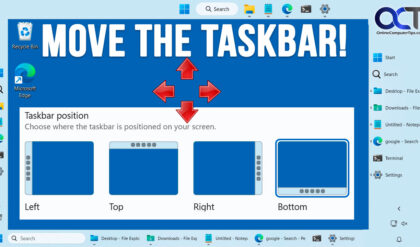
For example, we can’t even move the taskbar to the side or top of the screen.
Another thing that you can’t do in Windows 11 is pin your files to the start menu.
Sure, you can pin standard application shortcuts, but nobody wants to manually create a shortcut to a specific Word document or PDF file just to pin it for quick access.
Fortunately, there is a relatively simple workaround that allows you to bypass these modern operating system restrictions.
In this article, we will be showing you exactly how to create a right-click “Pin to Start” option to easily pin individual files and folders to your Start menu

To accomplish this, we will be making a simple change to the Windows registry.
The registry is a hierarchical database that stores critical configuration settings and options for Windows, as well as for installed applications and hardware devices.
Before making any registry changes, it is always a good idea to make a backup of the registry or create a System Restore point just to be safe.
Many times, you will need to manually make these registry changes by typing in values yourself.
However, if you click the download link provided here, you can actually download the exact files required to make these changes for you automatically.
Once you download the zip file and extract it, you will have two distinct registry files ready to go.
One is used to add the pin to start option, and the other is used to remove it if you ever change your mind.

Viewing the Registry File Contents
If you were to open these files in Notepad or some other text editor app, you would see that they are quite simple.
PinToStart.reg file contents:
Windows Registry Editor Version 5.00[HKEY_CLASSES_ROOT*\shellex\ContextMenuHandlers\PintoStartScreen]
@=”{470C0EBD-5D73-4d58-9CED-E91E22E23282}”
RemovePinToStart.reg file contents:
Windows Registry Editor Version 5.00
[-HKEY_CLASSES_ROOT*\shellex\ContextMenuHandlers\PintoStartScreen]
How to Apply the Registry Hack
To add these settings into the Windows registry, all you need to do is double-click on the PinToStart.reg file.
Next, click on the Run button when the security warning pops up.

Then, you will need to say yes to the User Access Control prompt that will appear next on your screen.
You will then be asked to confirm that you actually want to add the information to the registry.
Click the Yes button to continue with the installation process.

Finally, you will be shown a confirmation dialog box letting you know the process was successful.
You can simply click on the OK button to close it out.

Using the New Pin to Start Feature
To pin a file or folder to the start menu, all you need to do is find that specific file on your computer.
Right-click on the file, then click on Show more options.
Finally, click on Pin to Start from the expanded context menu.
By the way, it is possible to completely bypass the “Show more options” menu by holding down the Shift key on your keyboard while right-clicking.
You can also change the right-click menu so it works exactly like it did in Windows 10 using a separate registry edit.

Once you click on Pin to Start, you can then click on the Windows Start button.
You will now see that your chosen file will be perfectly pinned there for quick access.

Managing Your Pinned Files
It will most likely be pinned at the very end of the list, but you can easily change its location.
You can right-click on the newly pinned icon and choose Move to front to bring it to the top.
Alternatively, you can simply drag it to a new position with your mouse.
If you no longer need the shortcut, you can also click on Unpin from Start to remove it from the Start menu entirely.

As you can see, it is fairly easy to create a right-click “Pin to Start” option to pin files and folders to your Start menu.
Maybe someday in the future, Microsoft will build this directly into Windows 11 so we can do this without editing the registry!
For additional training resources, check out our online IT training courses.
Check out our extensive IT book series.