Last Updated on June 4, 2026
Creating bootable USB flash drives to do things such as install operating systems, load system repair and disk cloning tools is becoming a more common practice these days. In order to install Windows for example, you will need to create a bootable flash drive since Windows 11 is too large for a DVD, and nobody really uses DVDs these days.
There are many bootable USB tools you can use these days such as Rufus, WinToUSB, and UNetbootin. But if you are looking to create a bootable USB flash drive that can be used for multiple images, you might want to check out Ventoy. In this article, we will be showing you how to create and use a Ventoy bootable USB drive in Linux using the GUI and CLI (command line interface).

Downloading and Extracting Ventoy in Linux
1. Download the Ventoy TAR File
The very first step will involve going directly to the official Ventoy website and downloading the Linux version of the software. If you prefer to download Ventoy via the command line, you can easily use the standard wget command below. You will just need to manually replace the asterisk with the specific version of Ventoy you want to install.
wget https://github.com/ventoy/Ventoy/releases/latest/download/ventoy-*-linux.tar.gz
Example
wget https://github.com/ventoy/Ventoy/releases/download/v1.1.10/ventoy-1.1.10-linux.tar.gz
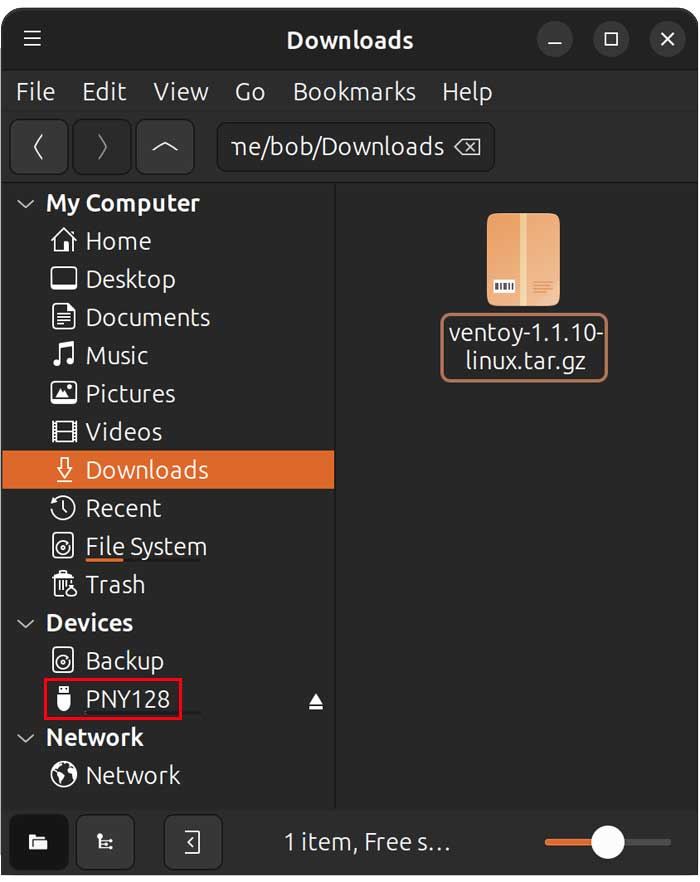
The image below shows the Ventoy TAR file that is located in our Downloads directory on the PC.
2. Extract the Downloaded Archive
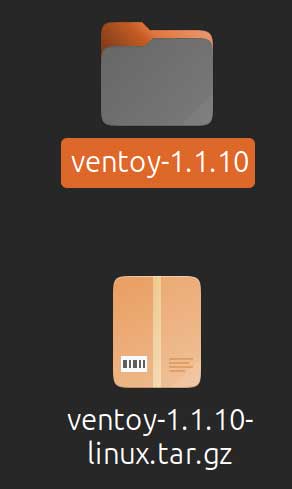
To begin the actual setup, you will need to open the Terminal app. Navigate straight to your Downloads folder using the cd ~/Downloads command. If your Ventoy file downloaded to a completely different folder on your machine, you will need to alter the path command accordingly. Next, we will need to extract the TAR file before we can install Ventoy using the following command. Just be absolutely sure to edit the exact version numbers if your file differs from what is shown below.
tar -xzf ventoy-1.1.10-linux.tar.gz
3. Identify Your USB Disk Designation
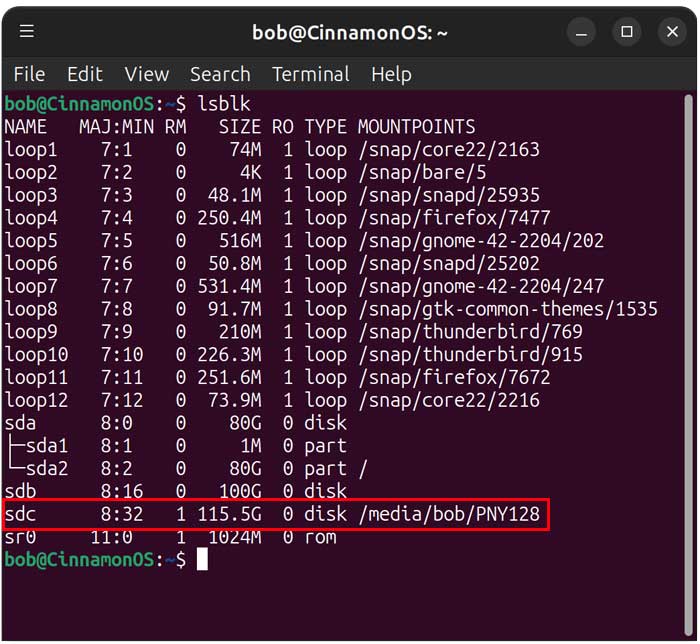
Next, we will change into the newly downloaded Ventoy files directory in the Terminal using the cd ventoy-1.1.10 command. Before we blindly install Ventoy on our USB flash drive, we want to make sure that we are using the absolute correct disk designation. This crucial step ensures we do not install the bootloader on the wrong drive and wipe it. We will use the standard lsblk command to view all attached volumes. Our target flash drive is explicitly listed as the /dev/sdc disk.
Installing Ventoy Using the CLI Method
1. Execute the Shell Script
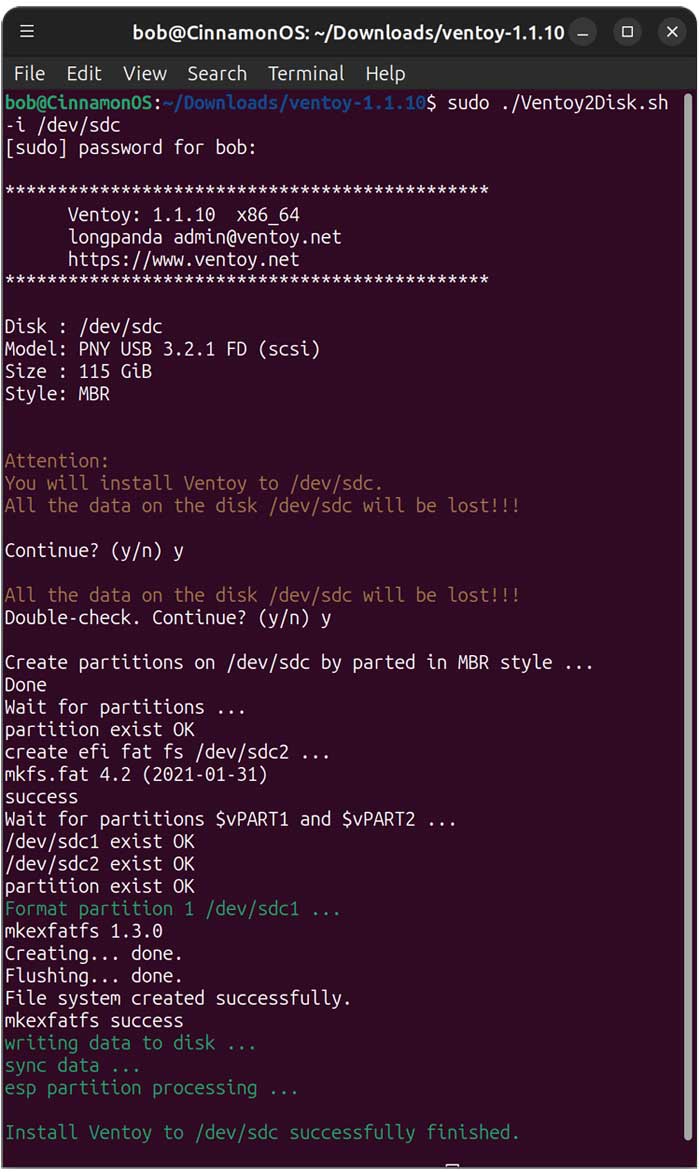
Now we will officially install Ventoy on the flash drive using the sudo ./Ventoy2Disk.sh -i /dev/sdc command. You will need to enter your local administrator password to continue. The terminal will explicitly warn you that all existing data on the target disk will be permanently lost. Type ‘y’ to confirm the complete wipe.
2. Verify the Drive Renaming
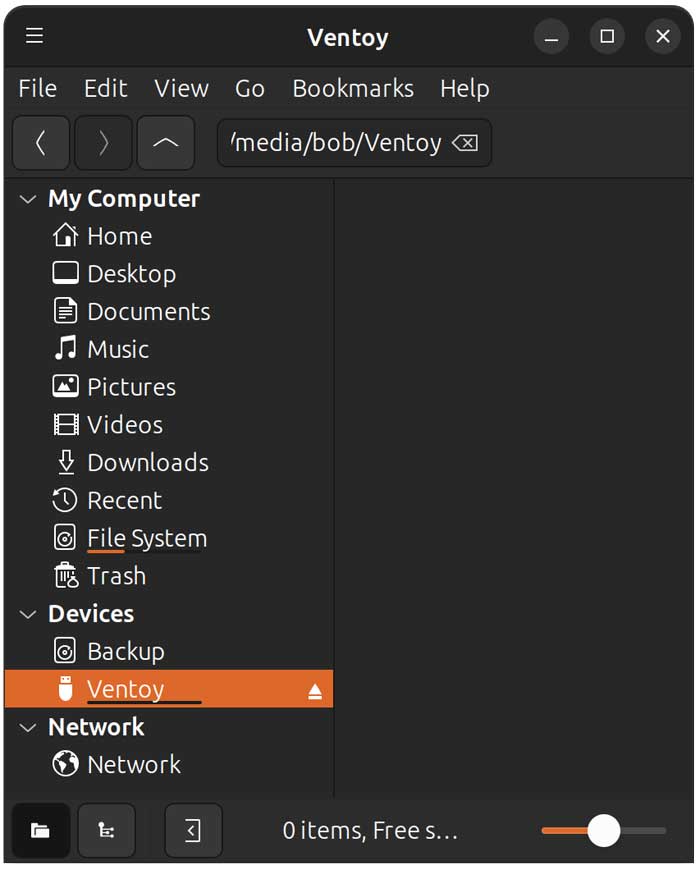
Now we can easily see that our physical flash drive has been formally renamed to Ventoy by the system. You will not see anything at all on the drive when you initially go to it in the GUI Files app. Now you can simply drag and drop any ISO files you want to add to your flash drive straight into the Ventoy drive itself.
1. Locate the GUI Installer File
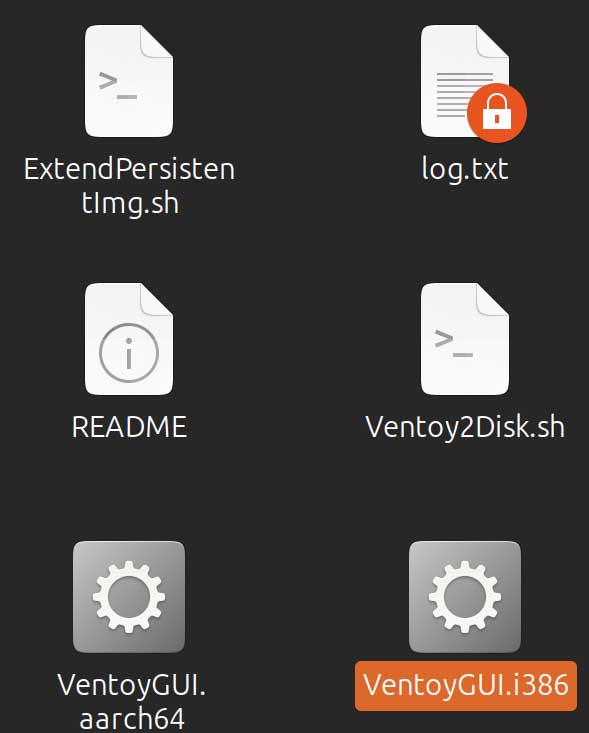
There is an easy way to install Ventoy using a graphical method if you prefer visual tools. You will still need to perform a couple of quick steps via the command line first. The very first thing you should do is look directly in your extracted Ventoy files folder. Make absolutely sure there is a file there specifically called VentoyGUI.x86_64.
2. Make the GUI File Executable
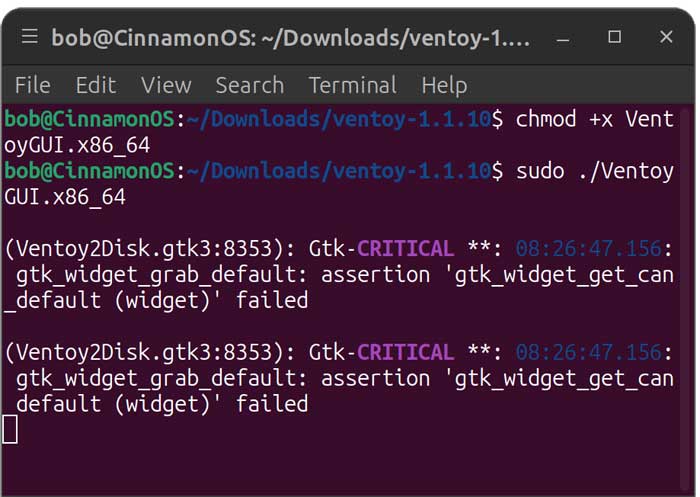
Next, you will need to make the GUI file completely executable. Type chmod +x VentoyGUI.x86_64 directly into the Terminal. Now you can safely launch the Ventoy GUI to install Ventoy on the USB by typing sudo ./VentoyGUI.x86_64. You will likely see some terminal messages that say Gtk-CRITICAL pop up. This is completely normal behavior and you can safely ignore these warnings.
3. Select the Target Flash Drive
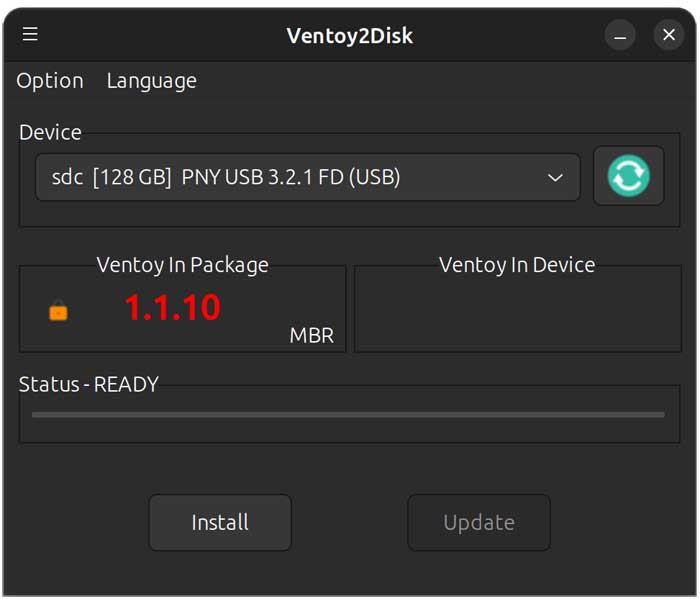
Now you should instantly see the Ventoy2Disk GUI open directly on your desktop screen. You can then select your specific physical flash drive straight from the Device dropdown menu. You should also verify the exact version of Ventoy you are going to install listed in the Ventoy In Package section.
4. Format and Install Ventoy
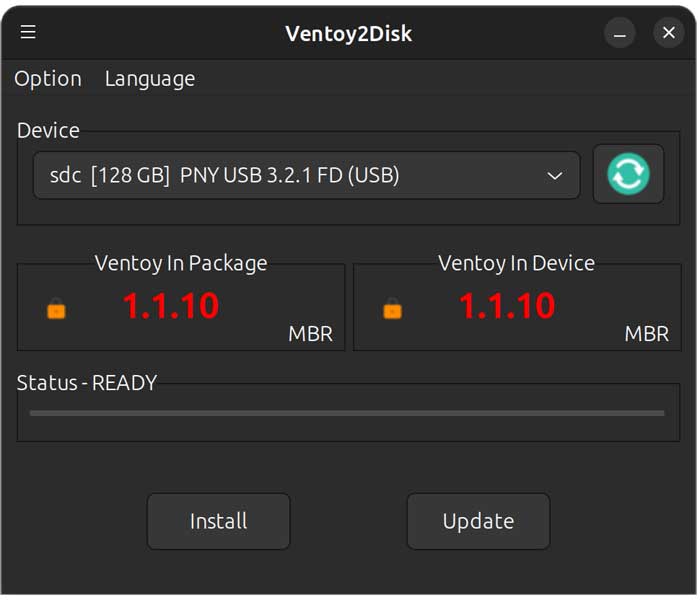
Next, click the Install button to begin the writing process. You will be shown a strict warning message saying the device will be formatted and all the data will be lost. Click the OK button to confirm this destructive wipe. Once the complete installation is done, you should see the exact same version numbers match in the Ventoy In Device section. The GUI method also provides a handy Update button if you need to update your base version of Ventoy to a newer release later.
5. Mount the Drive and Copy ISOs
One minor issue you might have when using the GUI method is that your flash drive will sometimes become virtually disconnected. You will no longer see it visually within the Files app. If that happens, you can easily try to mount the flash drive manually using the sudo mount /dev/sdc /mnt command. Just be absolutely sure to change the drive designation to match your actual flash drive letter.
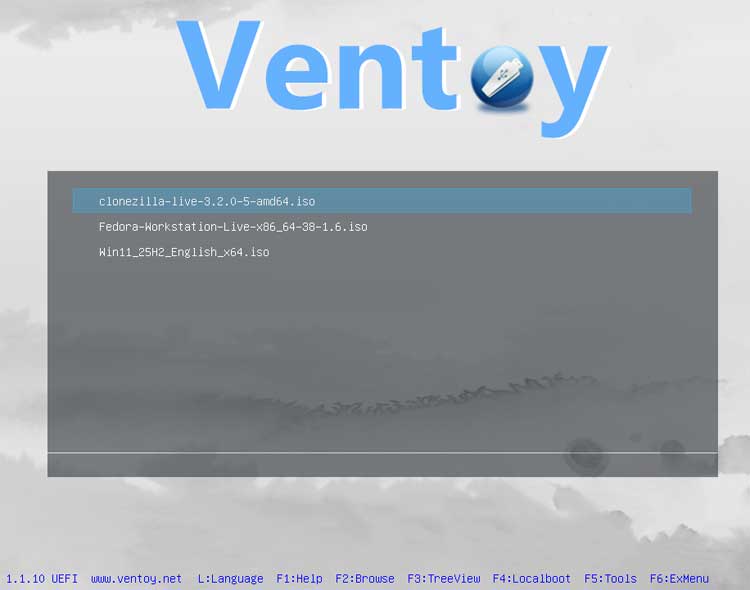
Now you can simply drag and drop your raw ISO image files directly into your Ventoy flash drive. For our example, we will copy a Windows 11, Fedora Linux, and Clonezilla ISO file straight to our drive. When we boot the computer to the Ventoy flash drive, we have the immediate option to load any one of these independent images.
You can also use Ventoy in Windows if you are not a Linux user.
For additional training resources, check out our online IT training courses.
Check out our extensive IT book series.