There are many types of hard drives that you can use for your workstation or server computers such as IDE, SATA, SCSI, Solid State (SSD), and now SAS or Serial Attached SCSI.
Serial Attached SCSI delivers new levels of speed and connectivity while retaining the functionality and reliability that has made SCSI so dominant for years. SAS provides greater dedicated bandwidth with smaller connectors and uses point-to-point disk drive interfaces. SAS provides backwards compatibility with certain SATA drives and offers advanced features from fiber channel and the physical interface from SATA along with the performance and reliability of traditional SCSI technology. The first generation of these products will deliver full-duplex performance at 3 Gb/sec.
Unlike older parallel SCSI technologies that shared bandwidth across multiple devices, SAS uses a point‑to‑point architecture. This means each drive has a dedicated connection to the controller, resulting in improved performance, lower latency, and better scalability in enterprise environments.
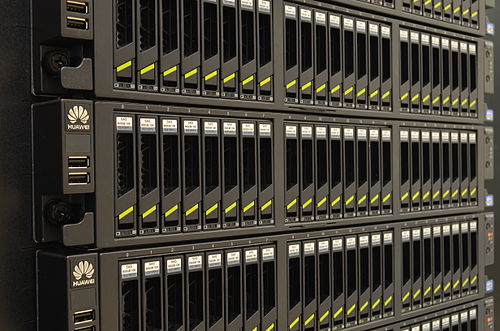
Benefits of SAS:
Based on Serial technology
Cheaper than SCSI
Greater bandwidth scalability
Compatible with SATA
Designed to be extremely flexible
Simplified cable routing – no need to daisy chain devices
Smaller cable connectors
Longer cabling distances
Dual ported SAS drives for redundancy
Allows for smaller drives
In addition to these advantages, SAS drives are designed for continuous, mission‑critical workloads. They typically support higher rotational speeds (10,000 or 15,000 RPM in traditional HDDs) and are engineered for 24/7 operation, making them ideal for servers, data centers, and high‑availability systems.
Another key advantage of SAS is reliability. SAS drives generally have higher Mean Time Between Failures (MTBF) ratings compared to consumer‑grade SATA drives. Dual‑ported SAS drives allow two independent paths to the same disk, which improves fault tolerance and enables failover configurations commonly used in enterprise storage arrays.
While SATA drives are often chosen for cost‑effective bulk storage, SAS strikes a balance between performance, reliability, and scalability. This makes SAS a preferred choice for database servers, virtualization platforms, and applications where consistent performance and uptime are critical.As storage technology continues to evolve, SAS remains an important enterprise standard, often used alongside SSDs in hybrid storage environments where high‑speed access and long‑term reliability are required.
For additional training resources, check out our online IT training courses.
Check out our extensive IT book series.