Last Updated on May 13, 2026
If you have been using Microsoft Windows for any amount of time, you are most likely using File Explorer to manage your files and folders. You are also probably using the default Windows folders such as Documents, Pictures, Photos, Desktop and so on that you find on the left side of File Explorer.
The default Windows folders are located on the C drive of your computer under C:\Users\username\Documents and so on and many people like to redirect these folders to a different hard drive that has more storage capacity. But to do that, you need to go to the properties of each folder and change the location to the new drive and then move the files over. But if you do not have the location tab then you will not be able to redirect your Windows user folders. In this article, we will be showing you how to fix the missing Location tab for your folder properties in Windows.
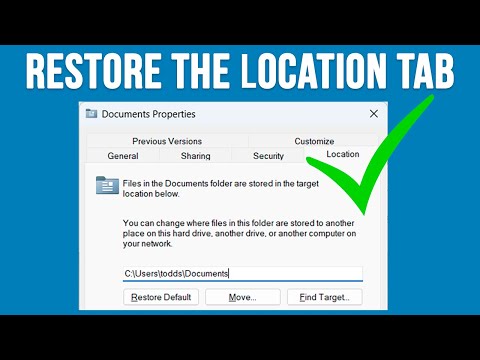
1. Identify the Missing Location Tab
When you right-click on one of the default Windows folders such as Documents or Pictures and choose the Properties option, you should normally see a dedicated Location tab sitting near the top of the menu. But there might be a high chance that you are completely missing the Location tab, as seen in the comparison images provided below. When this specific tab goes missing, the system completely locks you out of native folder redirection options.


2. Open the Windows Registry Editor
If that is the case for your specific machine, you can perform a simple registry edit to safely fix the missing location tab for your folder properties. To do so, you will first need to open the Windows registry editor by typing regedit directly into your main taskbar search box. Click on the Registry Editor app result and accept the security prompt to successfully launch the tool with administrative privileges.
3. Navigate to the PropertySheetHandlers Key
Once you have the registry editor open on your desktop, you can quickly navigate to the specific system folder we need to modify. You can do this effortlessly by copying and pasting the exact text Computer\HKEY_CLASSES_ROOT\Directory\shellex\PropertySheetHandlers straight into the address bar at the top of the registry editor. Press the Enter key, and the folder tree on the left will immediately jump to the correct directory location.
4. Look for the Target Registry Key
You will then see a master registry key named PropertySheetHandlers highlighted in the left-hand pane. Directly under that specific key, you are supposed to have another long sub-key named exactly {4a7ded0a-ad25-11d0-98a8-0800361b1103}. If you do not have this complicated key listed in the folder tree, then that is most likely your exact problem and you will need to manually add it back into the system.

5. Create a New Registry Key
To safely add the missing key to your registry database, you can either right-click directly on the PropertySheetHandlers folder on the left or right-click anywhere in the blank white area in the right pane. From the small context menu that instantly appears, carefully choose New and then select Key from the slide-out options. This will automatically create a brand new, blank yellow folder icon waiting for you to type a name.
6. Name the New Registry Key
Now you need to precisely name this new folder to match the exact string of characters that Windows is actively looking for to restore the tab. You should copy and paste in {4a7ded0a-ad25-11d0-98a8-0800361b1103} for the name rather than trying to type it out manually to avoid any frustrating typos. After you add the new key and press Enter, your registry editor window should look structurally identical to the reference image below.

7. Verify the Folder Properties Again
Now that the Windows registry has been successfully updated, you can safely close out of the Registry Editor application. You should now be able to go right back to the properties of your default Windows folders and finally see the Location tab beautifully restored at the top. Here is another method you can confidently use to safely redirect your folders if you simply cannot get the Location tab back using this specific registry fix.
For additional training resources, check out our online IT training courses.
Check out our extensive IT book series.