Finding a reliable internet connection is no longer a luxury. It’s essential for work, entertainment, communication and daily life. For many users, however, persistent issues like slow speeds, dropped connections and unresponsive customer service make choosing the right provider a frustrating experience. So, who are the top-rated Wi-Fi providers in the Midwest, and how do they compare across regions?
Below is a curated list of leading providers across the United States. These companies are recognized for strong customer ratings, reliable networks and broad service coverage.
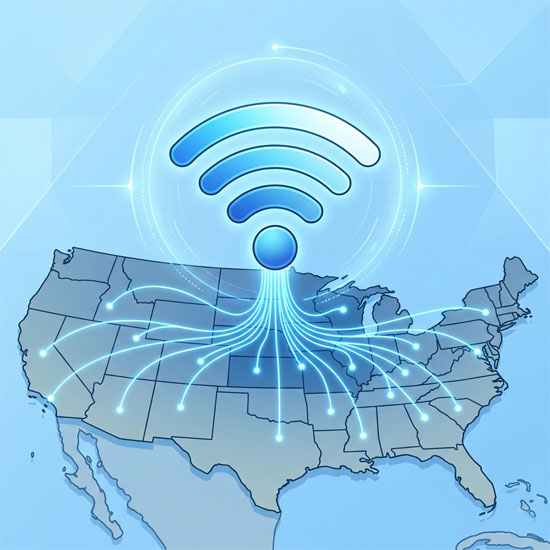
Midwest Region
The Midwest presents a mix of urban and rural connectivity challenges, making reliability and coverage especially important. Users often benefit from providers with strong regional infrastructure and consistent performance in varying weather conditions.
1. i3 Broadband
i3 Broadband is a regional provider delivering high-speed, 100% fiber internet across parts of Illinois and Missouri. As a true Fiber-to-the-Home provider, it offers symmetrical upload and download speeds ideal for streaming, gaming, remote work and other high-bandwidth activities. i3 Broadband combines reliable performance with i3 Smart Wi-Fi, locally based U.S. support and a customer-focused experience built for Midwest conditions.
Key features include:
- No-risk trial guarantee with no contracts, free installation, free activation, free tech visits, 30-day money-back guarantee and up to $300 contract buyout credit
- 100% fiber-optic internet for consistent, high-speed connectivity
- i3 Smart Wi-Fi for whole-home coverage, adaptive performance and device management
- Symmetrical gig-level speeds for seamless streaming, gaming and remote work
- Built-in security features, including threat detection and ad blocking
- Locally based U.S. customer support for fast, reliable assistance
2. Xfinity
Xfinity is part of Comcast and was founded in 1963. It provides fiber-powered internet via a hybrid fiber-coaxial network at multiple speed tiers, including gig-level options for gaming and streaming. Contract-free plans, long-term price guarantees, and bundled mobile and entertainment services enhance flexibility. Strong coverage across urban and suburban areas ensures reliable performance, while digital tools simplify account management and network optimization.
Key features include:
- Fiber-powered hybrid network for broad coverage and consistent speeds
- Multiple speed tiers, including gig-level plans for high-demand users
- No annual contracts with optional multiyear price guarantees
- Unlimited data and Wi-Fi equipment included in select plans
- Bundled services with mobile, streaming and entertainment options
- Whole-home Wi-Fi solutions for consistent indoor coverage
- 30-day money-back guarantee on internet services
- Access to digital tools for network management and troubleshooting
- Nationwide availability with a strong presence in Midwest markets
Northeast Region
The Northeast features dense urban areas with access to high-speed fiber and cable networks. Competition among providers typically results in faster speeds and more service options.
3. Optimum
Optimum delivers ultra-fast fiber internet across the Northeast, supporting streaming, gaming, video calls and remote work with reliable performance even during peak hours. Its plans include symmetrical upload and download speeds, long-term price locks, and flexible bundles with TV and mobile, all backed by advanced Wi-Fi coverage and expert support. Continuous fiber expansion and network upgrades make Optimum one of the region’s top-rated providers for speed, reliability and low latency.
Key features include:
- Fiber speeds from 300 Mbps up to 8 Gig
- Symmetrical upload/download speeds with low latency
- Five-year price lock for predictable billing
- Whole-home Wi-Fi with up to three extenders and ongoing support
- Bundles with TV, mobile or both for added savings
- Free professional installation
- 9% network reliability with award-winning performance in NY, NJ and CT
4. Verizon Fios
Verizon Fios launched in 2000 and offers 100% fiber-optic internet across the Northeast with ultra-fast, near-symmetrical speeds. Its network supports streaming, gaming, remote work and multiple devices with low latency. Flexible pricing and bundled mobile and entertainment choices add convenience, while digital tools help monitor performance and optimize home Wi-Fi.
Key features include:
- 100% fiber-optic network with ultra-low lag and 99.9% reliability
- Plans from 300 Mbps up to 2 Gbps, supporting gaming, streaming and remote work
- All-in pricing with no hidden fees or equipment charges
- Three-year price lock guarantee on all plans for budget stability
- Bundled entertainment perks including Disney+, Hulu, ESPN+, Netflix and HBO Max
- Whole-home Wi-Fi options with routers and extenders for consistent coverage
- Mobile + Home discounts for Verizon postpaid subscribers
- High-capacity network enabling multiple devices to connect simultaneously
South Region
The South offers a wide range of providers, though availability can vary between urban and rural communities. Users should prioritize providers known for dependable coverage and scalable speed options.
5. AT&T Fiber
Launched in 2005, AT&T Fiber delivers ultra-fast fiber internet across the Southern U.S., with optional wireless backup for uninterrupted streaming, gaming, work and smart home use. Its All-Fi Pro system uses Wi-Fi 7 for whole-home coverage, device prioritization and enhanced security. Flexible plans, rewards and reliable symmetrical speeds make AT&T Fiber a reliable Wi-Fi provider in the region.
Key features include:
- Fiber speeds from 100 Mbps up to 5 GIG, with symmetrical upload and download speeds
- AT&T All-Fi Pro Wi-Fi 7 system for optimal coverage and performance
- Built-in internet backup using a wireless network for uninterrupted connectivity
- Advanced security with AT&T ActiveArmor® protection
- Flexible bundles including home internet, wireless and smart home support
- Transparent pricing with no hidden fees, equipment charges or annual contracts
- Reward incentives for new customers, including gift cards worth up to $200
6. Cox Communications
Cox Communications provides high-speed internet, mobile, TV and home phone services across the Southern U.S. By combining fiber-powered internet with coaxial connections and strong 5G coverage, it delivers reliable speeds for gaming, work and streaming. Cox offers customizable bundles with Price Lock Guarantees, unlimited data options and Panoramic Wi-Fi while prioritizing sustainability, accessibility and community engagement.
Key features include:
- Internet speeds up to 2 GIG, with options for unlimited data
- Panoramic Wi-Fi for seamless coverage throughout the home
- Multi-service bundles including mobile, TV and home phone
- Long-term Price Lock Guarantees for select internet and mobile plans
- Cost-effective plans for qualifying households
- Strong 5G mobile network for reliable wireless connectivity
- Investment in sustainability and community programs
- Customized solutions for both residential and business customers
West Region
The West combines major metropolitan hubs with expansive rural areas, creating diverse connectivity needs. Top providers in this region balance speed, innovation and broad service coverage.
7. Quantum Fiber
Quantum Fiber supplies high-speed fiber internet up to 2 Gbps with symmetrical upload and download rates, unlimited data, and no annual contracts. Its reliable network and 360 Wi-Fi coverage support streaming, gaming, remote work and smart home devices. With straightforward pricing, Price for Life guarantees and easy setup, Quantum Fiber provides fast, consistent internet, making it one of the most trusted Wi-Fi providers in the West Region.
Key features include:
- Speeds from 200 Mbps up to 2 Gbps for homes of all sizes
- Unlimited data with no annual contracts or surprise fees
- 9% network reliability with low latency for streaming and gaming
- Whole-home coverage with 360 Wi-Fi® and optional mesh expansion
- Price for Life guarantee to lock in monthly rates
- Easy account management via the Quantum Fiber app
- Fast, hassle-free installation and support for multi-device households
8. Google Fiber
Established in 2010 as part of Alphabet, Google Fiber provides ultra-fast fiber internet with symmetrical gigabit and multi-gigabit speeds, no data caps, no contracts, and included equipment. It supports smart homes, streaming, gaming and remote work while investing in digital equity programs for public housing and nonprofits. With advanced Wi-Fi 6E routers, optional mesh coverage, high customer satisfaction and expanding availability, it is one of the West’s top-rated Wi-Fi providers.
Key features include:
- Symmetrical gigabit and multi-gigabit internet plans, starting at $70/month
- No contracts, data caps, installation or equipment fees
- Advanced Wi-Fi 6E routers with optional mesh access points for whole-home coverage
- Digital equity initiatives connecting public housing and nonprofits
- Straightforward pricing with service guarantees and responsive customer support
- Rapid network expansion in select metro areas
Top Wi-Fi Provider Feature Comparison
Here’s a quick look at key features across eight leading internet providers to help everyday users choose the right plan.
| Provider | Top Speed | Unlimited Data | Price Stability | Contracts | Network Type | Whole-Home Wi-Fi |
| i3 Broadband | Up to Gig+ | Yes | Yes | No | 100% Fiber | Yes |
| Xfinity | Up to Gig+ | Yes | Yes (select plans) | No | Fiber/Coax | Yes |
| Verizon Fios | Up to 2 Gbps | Yes | Yes | No | 100% Fiber | Yes |
| Optimum | Up to 8 Gbps | Yes | Yes | No | 100% Fiber | Yes |
| AT&T Fiber | Up to 5 Gbps | Yes | Yes (price locks) | No | 100% Fiber | Yes |
| Cox Communications | Up to 2 Gbps | Optional | Yes (with bundle) | No | Fiber/Coax | Yes |
| Quantum Fiber | Up to 2 Gbps | Yes | Yes (Price for Life) | No | 100% Fiber | Yes |
| Google Fiber | Up to 8 Gbps | Yes | Yes | No | 100% Fiber | Yes |
Addressing Common Internet Pain Points
Many users switch providers due to recurring frustrations. Here’s how reliable providers typically address these issues:
- Unreliable connections: Leading providers invest in fiber infrastructure and network redundancy to reduce downtime.
- Poor customer service: Highly rated companies prioritize customer support through faster response times and better service channels.
- Slow speeds: Modern providers focus on high-speed tiers that support streaming and gaming simultaneously.
What to Look for in a Wi-Fi Provider
Choosing a dependable W-Fi provider goes beyond simply picking the cheapest plan. Users should focus on these critical attributes:
- Network reliability: A strong provider delivers consistent speeds with minimal outages. Reliability is especially important for remote work, video calls and streaming.
- Customer ratings and support: Poor customer service is one of the most common complaints among users. Providers with high customer satisfaction scores tend to resolve issues faster and communicate more effectively.
- Service area coverage: Not all providers operate in every region. Some excel in urban areas but struggle in rural zones, while others specialize in broader coverage.
- Speed and performance: Slow internet speeds can disrupt everything from Zoom meetings to Netflix streaming. Look for providers offering modern fiber or high-speed cable infrastructure.
How Geography Impacts Wi-Fi Performance
Geographic location often influences the quality of an internet connection. Understanding these regional factors helps users choose the most suitable Midwest Wi-Fi or national provider for their needs.
Rural Areas
Rural users often face limited options and slower speeds. Fixed wireless and satellite providers are more common here, but reliability can vary. In many cases, infrastructure investments lag behind urban areas, leading to higher latency and inconsistent performance. Users in these regions should prioritize providers with proven uptime and expanding coverage initiatives.
Suburban Areas
Suburban regions typically have access to cable and fiber providers, offering a balance between speed and affordability. This makes it easier for households to find plans that support streaming, gaming and remote work without significant slowdowns. However, service quality can still differ by neighborhood, so checking local reviews and performance reports is essential.
Urban Areas
Cities usually provide the fastest internet options but may experience congestion during peak hours. High population density can strain networks, especially in apartment complexes or shared buildings. Choosing a provider with strong infrastructure and ample bandwidth can help maintain consistent speeds even during busy periods.
Weather Considerations
Extreme weather can impact infrastructure. Heavy snow, storms or temperature fluctuations may disrupt service or damage equipment. Providers with robust networks, backup systems and proactive maintenance practices tend to perform better under these conditions, ensuring more stable connectivity year-round.
Choosing the Right Wi-Fi Provider for Reliable, High-Speed Connectivity
Selecting the right provider comes down to location, performance needs and service quality. Factors like reliability, speed and customer support should carry more weight than price alone. By evaluating these key elements and considering regional differences, users can make a more informed choice and achieve a consistent, high-quality internet experience.