Last Updated on March 8, 2026
If you still happen to have music CDs and want to digitize them by converting them to audio files that you can then store on your computer, you can easily do so. But finding the right CD ripping app will make the process easier on you.
If you want to convert your CD music collection to digital audio files such as MP3, FLAC or WAV files, you can easily do so with the free MusicBee CD ripping software. There are other CD ripping apps such as Exact Audio Copy (EAC) which is a bit harder to use but at the same time may yield different results when it comes to supported file types and how well it downloads album art, song names, and artist names.

To use MusicBee to rip your music CDs to audio files, you will first need to download it from their website and install it.
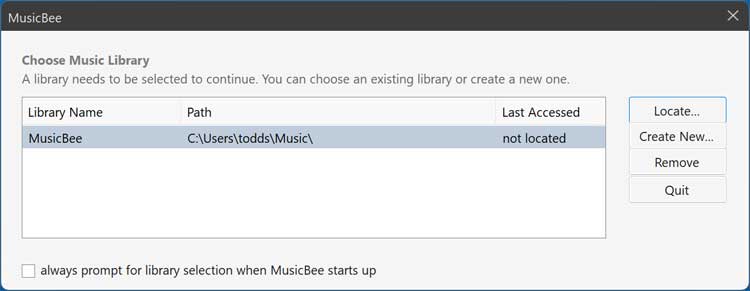
The first time you run MusicBee, you will need to configure a music library which can be done by clicking on the Create new button and choosing a folder on your computer.
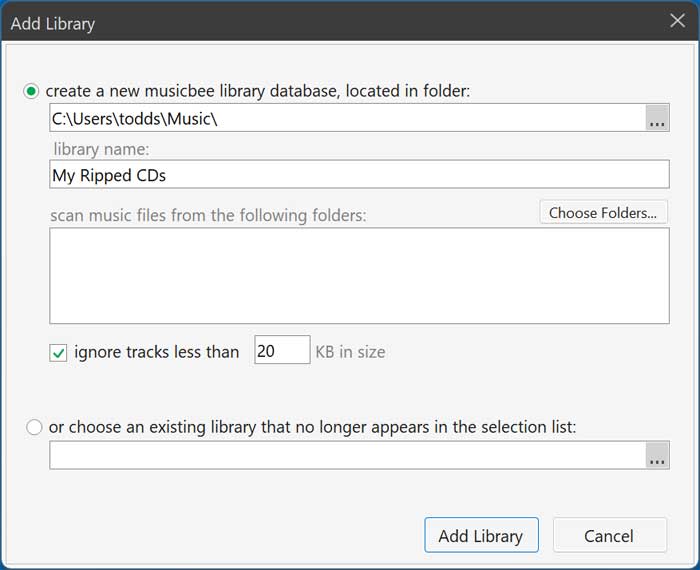
You can then give the library a name of your choosing and also import existing audio files that you might have on your computer located in other folders.
Once you are in the maid MusicBee interface, it will read the CD that you have in your CD/DVD drive and try and load the CD information such as artist, title and album name.
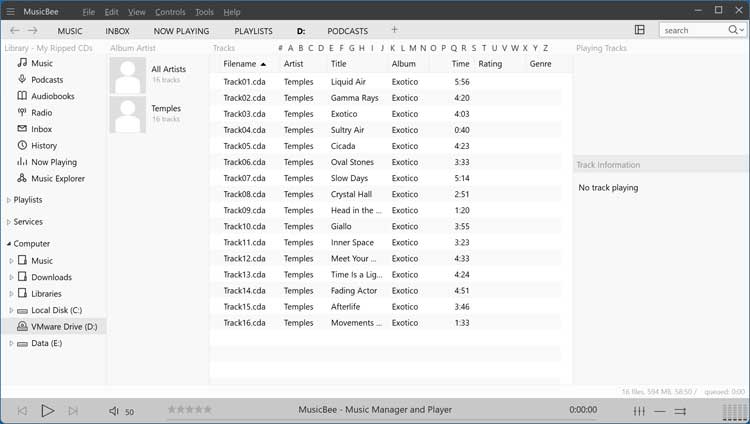
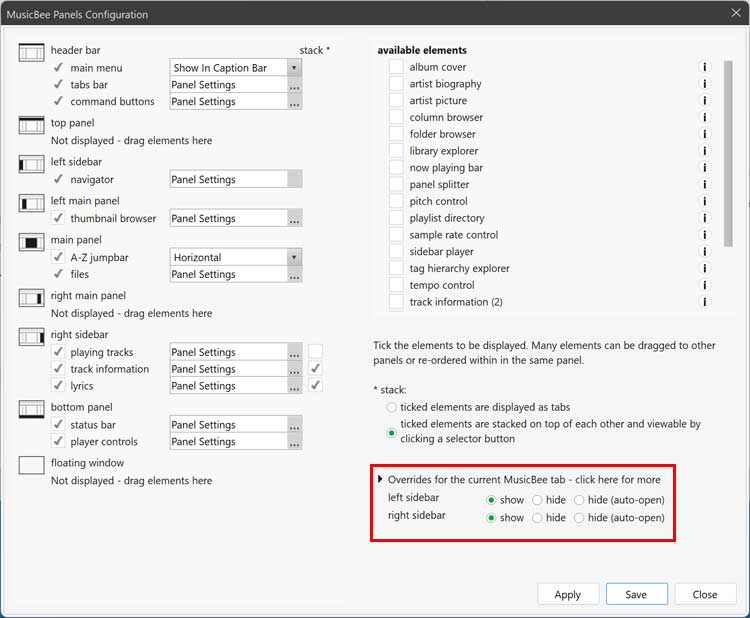
If you do not see your CD drive on the left side of the screen, you can go to the View menu and choose Arrange Panels. Then you can choose the show option for the left sidebar choice on this screen.
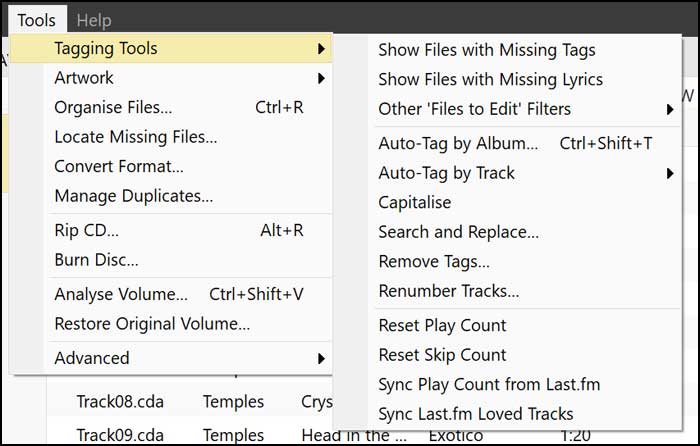
If MusicBee does not load the metadata information from your CD, you can go to the Tools menu and then to Tagging Tools and try one of the Auto-Tag options. You will need to select the songs you want to have this applied to first.
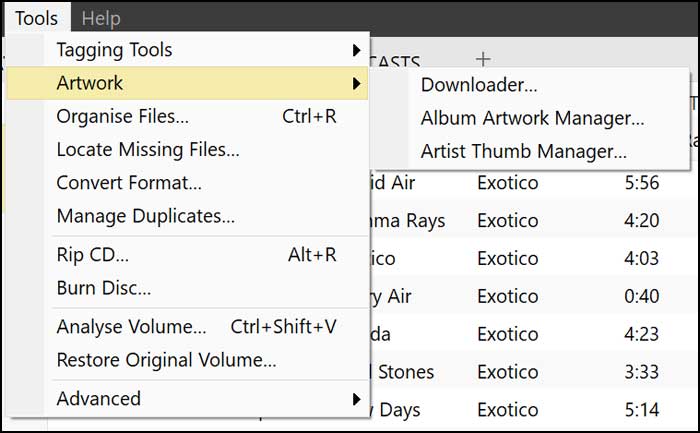
You can also go to the Artwork option and choose Downloader to see if it can find the album artwork to go along with your CD. If you have a copy of the album cover image, you can add it here as well.
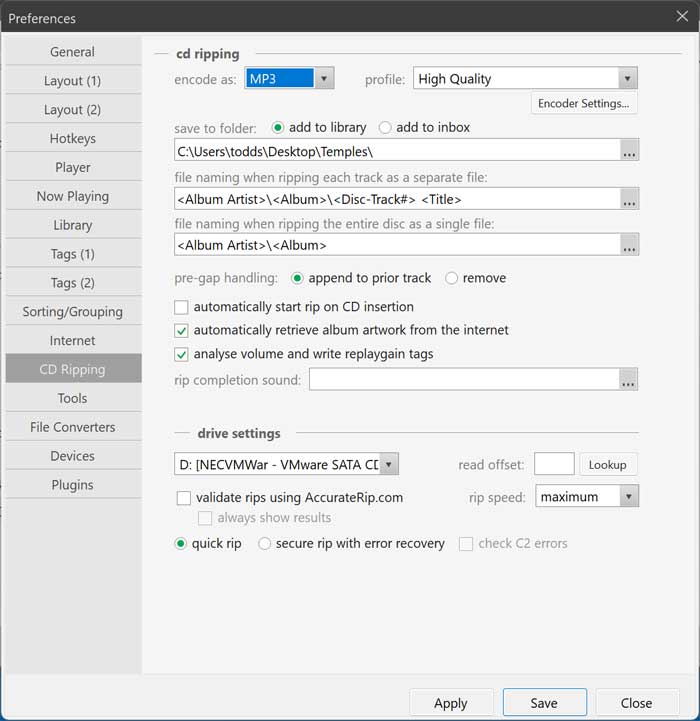
Before ripping your CD, you may want to check the conversion settings to make sure they will be converted to the format you want to use. To do so, go to the Edit menu and choose Preferences and then CD Ripping. Here you can choose between MP3, FLAC, WMA, Aiff and WAV.
You can also change other options such as having the converted audio files be added to your library or chang the naming convention for your music files. If you are receiving errors when ripping your CDs, you may want to change the rip speed from maximum to a lower value.
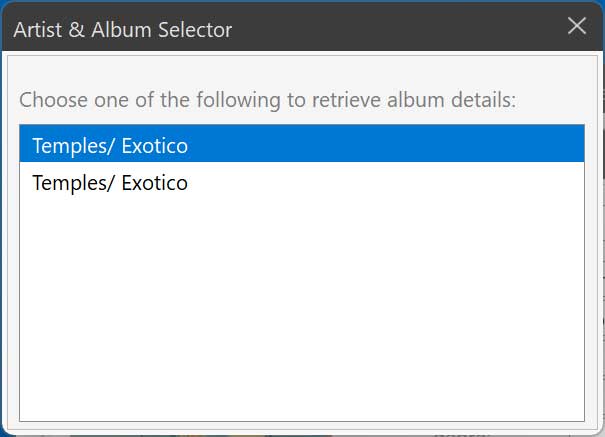
Once you are ready to begin the CD ripping process, go to the Tools menu and then choose Rip CD. You should then see an Artist & Album Selector popup screen with the artist and album name. You can then double click it to continue.
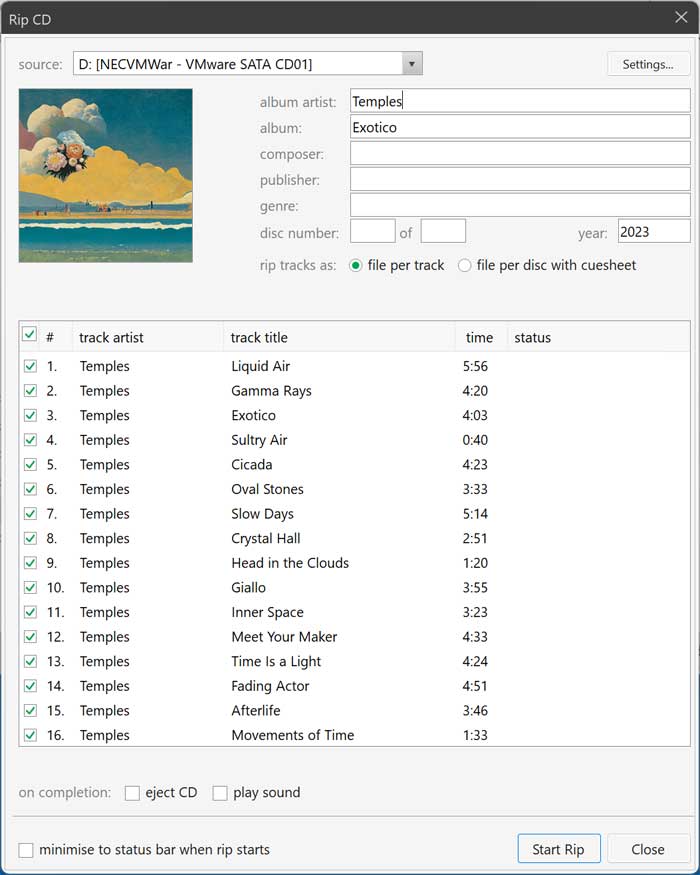
Now you can click the Start Rip button to begin the conversion process. The conversion process will begin and how long this takes will depend on the speed of your CD burner, what type of files you are creating and how many songs are on the CD.
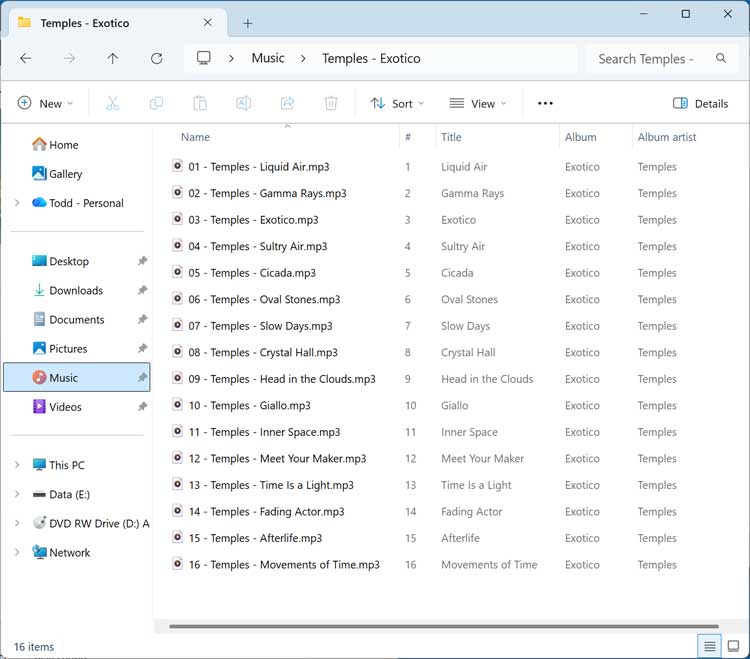
Once the process is complete, you can go to your library folder, and you should see a folder matching the name of your library that contains configuration and playlist information. You should also see a folder that contains the newly ripped files.
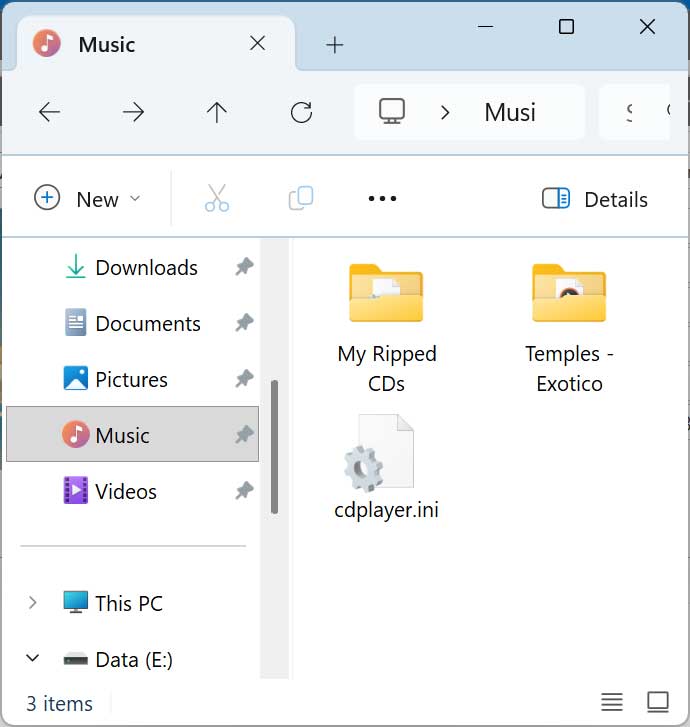
When viewing your files, you can choose to view them by details so that you can see things such as artist name, track name and album name.
Here are some other CD ripping apps you may want to check out.
For additional training resources, check out our online IT training courses.
Check out our extensive IT book series.