Last Updated on May 13, 2026
When it comes to our electronic devices, we tend to get notified on a regular basis about things we either care or don’t care about. If you are a Microsoft Windows user, then you are most likely used to seeing those desktop notifications pop up at the lower right corner of your screen above the system tray and may think there is nothing you can do about it.
You can actually control what types of notification you receive and also disable them if needed. But if you like seeing the notification but would like to customize how they look and where they appear, there are a couple of easy ways to do so.
In this article, we will be showing you how to change where Windows desktop notifications appear on the screen.
To accomplish the task of changing where your Windows desktop notifications appear, we will be using two different free programs to do so. You can check them both out and see which one works the best for you.
Change Windows Desktop Notifications Using TopNotify
1. Download and Launch TopNotify
The first software option is TopNotify, which can easily be downloaded directly via the official Microsoft Store that you should already have configured on your modern computer. Once you successfully download and fully install the application, it will automatically begin running silently in your system tray located at the lower right corner of the Windows taskbar. From there, you can simply right-click or click directly on the purple up-arrow icon to bring up the main configuration interface.

2. Choose Your Notification Location
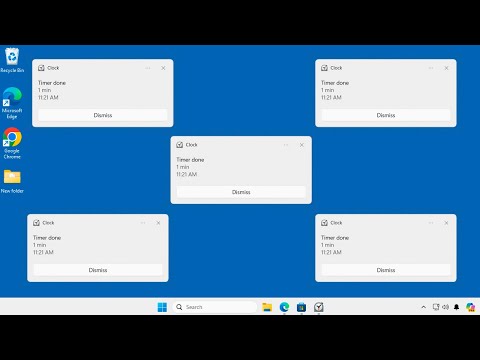
TopNotify is a relatively simple program by design, but it still packs some incredibly nice features for power users who want more control over their system alerts. Within the main interface, you can easily choose exactly which connected monitor you want to have Windows notifications appear on, as well as precisely what part of the screen they show up on. You have the ultimate flexibility to choose from the upper left, lower left, upper right, lower right, or even perfectly centered on the screen just by clicking the visual indicator grid.

3. Enable the Helpful Click-Through Option
One of the most frustrating things about native Windows alerts is that they temporarily block you from interacting with whatever is sitting directly underneath them. The enable click-through option provided by TopNotify is specifically used to allow you to seamlessly click on desktop icons or application buttons that are currently covered by the notification banner. Without this handy feature enabled, those underlying elements would normally be blocked and completely unclickable until the notification finally timed out and went away.
4. Adjust the Notification Transparency
Another fantastic visual feature included in this lightweight app is the notification transparency slider, which is used to make your notification boxes partially see-through. This is incredibly helpful if you want to be able to read incoming alerts while simultaneously keeping a close eye on a video or active web page running in the background. The comparison images below show exactly what a normal solid notification popup looks like compared to one that has been heavily made transparent using the slider tool.


5. Set Custom Sounds and Voice Reading
If visual alerts are not quite enough to grab your attention during a busy workday, TopNotify also includes some fantastic auditory features to keep you in the loop. You can actually have the TopNotify application automatically read your incoming text notifications out loud to you as they actively appear on the screen. Alternatively, if you prefer a quieter or more personalized environment, you can simply add and assign your own custom sound files to trigger whenever a specific alert pops up.
Change Windows Desktop Notifications Using Windhawk

1. Install the Windhawk Application
The next application we will be using to configure and drastically alter our desktop notifications is a powerful modular program called Windhawk. This unique application works by installing custom community-made mods directly into the app itself, which are then used to deeply customize and safely tweak exactly how the Windows operating system operates. Once you install the free Windhawk base application, which can be downloaded directly from their official site, you can quickly go to the Explore section to browse available tweaks.

2. Download the Notification Placement Mod
Inside the Windhawk Explore tab, you will want to utilize the top search bar and carefully type in the phrase “Customize Windows notifications placement” to quickly find the exact modification we need. Once the correct community mod pops up in your search results, go ahead and click on the Details button to view more in-depth information about what it specifically alters. From that detailed description page, you will simply need to click on the blue Install button to begin pulling the modification code into your local system.

3. Accept the Installation Risk Warning
Immediately after clicking the install button, you will be presented with a large security warning screen explicitly telling you to proceed with extreme care before making operating system changes. You will actually get this standard warning prompt for any and every single mod that you attempt to add to your local Windhawk installation, so it is completely normal behavior. As long as you are entirely comfortable with the source, you can confidently click the Accept Risk and Install button to bypass the warning and have the mod officially added to Windhawk.

4. Customize the Mod Settings and Padding
Now that the installation is complete, you can safely navigate over to the Settings section for the specific mod and choose exactly how you want your notification popups to physically appear on your screen. You have the exact same basic directional choices as you do with TopNotify, but you also gain the ability to choose precisely which monitor will be used to actively display your notifications. Furthermore, Windhawk allows you to get incredibly granular by customizing the exact distance from the right, left, top, and bottom of the screen using specific pixel measurements.

5. Save Your Custom Notification Layout
It is incredibly important to remember that every single time you make a graphical or numerical change to this specific mod, you will manually need to click on the Save settings button to have it fully applied to the system. If you ever change your mind and want to temporarily disable this custom placement feature, you can simply come back into the Windhawk interface and click directly on the Disable button. Alternatively, if you are completely finished testing the tool out, you can permanently remove the entire mod itself by clicking the Remove button.
6. Keep Windhawk Running in the Background
In order for these custom Windhawk mods to stay actively engaged and continuously working, the Windhawk core application will constantly need to be running silently in the Windows system tray. Fortunately, the program should automatically configure itself during installation to start up seamlessly with Windows every single time you boot your computer. If for any reason you suddenly notice that your customized notification mods stop working properly, you can usually fix the issue by simply restarting the Windhawk program from your Start menu.

For additional training resources, check out our online IT training courses.
Check out our extensive IT book series.