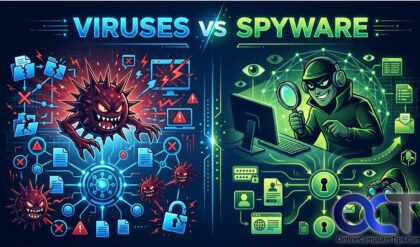
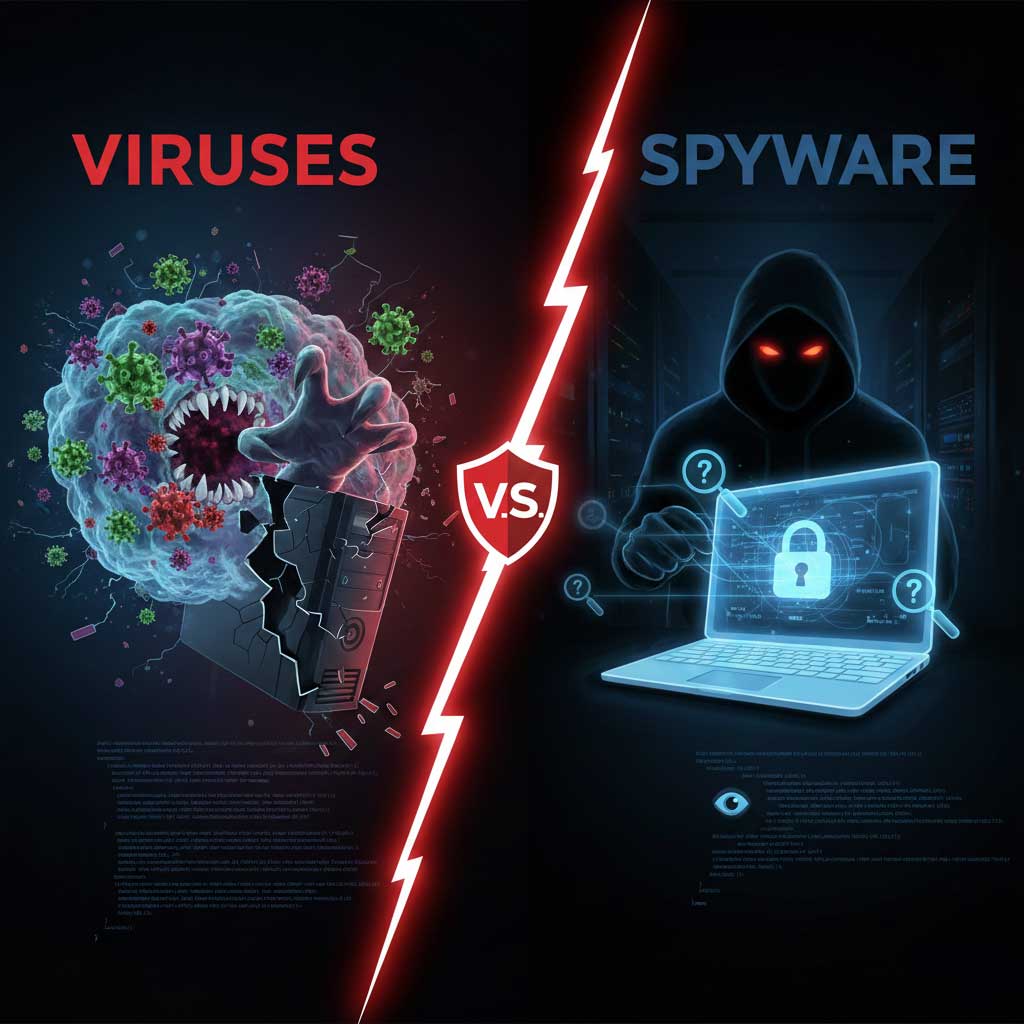
Cybersecurity threats are everywhere, and two of the most common types of malicious software are viruses and spyware. While both fall under the category of malware, they serve very different purposes and affect your system in distinct ways. Understanding these differences is essential for protecting your devices and personal data.
What is a Computer Virus?
A computer virus is a malicious program designed to replicate and spread across systems. It typically attaches itself to legitimate files or applications, activating when those files are executed.
Key Characteristics of Viruses:
- Self-Replicating: Viruses copy themselves and spread through infected files, email attachments, USB drives, and networks.
- Destructive Behavior: They can corrupt files, slow down performance, or even crash entire systems.
- Common Infection Methods: Downloading compromised software, visiting malicious websites, or opening phishing emails.
- Primary Goal: Disrupt operations, damage data, or gain notoriety for the creator.
What is Spyware?
Spyware is designed to monitor user activity and collect information without consent. It operates silently in the background, making detection difficult.
Key Characteristics of Spyware:
- Data Collection: Captures keystrokes, login credentials, browsing habits, and financial details.
- Stealthy Operation: Runs covertly, often bundled with free software or hidden in ads.
- Distribution Channels: Delivered through phishing attacks, malicious ads, or software downloads.
- Primary Goal: Financial gain through stolen data, identity theft, or browser hijacking.
Key Differences Between Viruses and Spyware
- Purpose:
- Viruses aim to disrupt systems and damage files.
- Spyware focuses on monitoring and stealing sensitive information.
- Replication:
- Viruses replicate and spread to other systems.
- Spyware does not replicate; it stays hidden and collects data.
- Impact:
- Viruses can crash systems and cause data loss.
- Spyware compromises privacy and financial security.
- Detection:
- Viruses are detected by antivirus software.
- Spyware requires anti-spyware or comprehensive anti-malware tools.
Which is More Dangerous?
Both are harmful, but in different ways. Viruses can cripple your system, while spyware silently compromises your privacy and financial safety. Spyware is often considered more lucrative for attackers because stolen data can be sold or exploited.
How to Protect Against Viruses and Spyware
- Install Security Software: Use reputable antivirus and anti-malware tools with real-time protection.
- Keep Software Updated: Regular updates patch vulnerabilities that malware exploits.
- Avoid Suspicious Links and Downloads: Don’t click unknown links or install unverified programs.
- Enable Firewalls and Use Strong Passwords: Add layers of security to prevent unauthorized access.
- Run Regular Scans: Schedule system scans to detect and remove threats early.
For additional training resources, check out our online IT training courses.
Check out our extensive IT book series.