
Last Updated on July 25, 2026
PING (Packet Internet Groper) is a program used to test whether a particular network host is online by sending an ICMP (Internet control message protocol) echo request and waiting for a response. It is used for troubleshooting connectivity between network devices such as servers, routers, workstations and printers. It is one of the most commonly used tools used to troubleshoot network connectivity between devices.
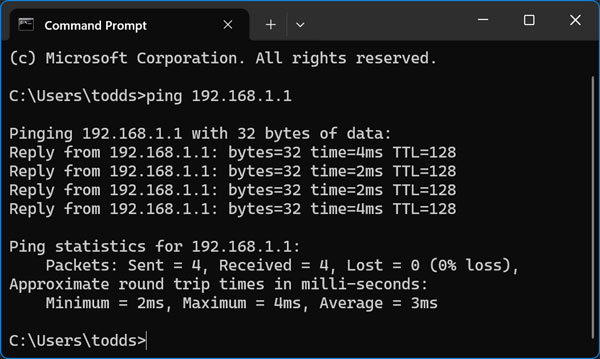
You can ping a host from a command prompt simply by typing ping followed by the IP address. For example type ping 192.168.0.1 to see if the host with the 192.168.0.1 IP address is reachable. It also works with hostnames on the same network so if you have a server called WebServer you can type in ping WebServer to check for connectivity. You can also ping a website by typing ping www.microsoft.com to check its availability. For Windows computers you will need to allow ICMP packets through the firewall in order to be able to ping those computers.
Executing the Ping Utility
1. Open the Command Prompt
To use the PING utility simply open a command prompt from your Start menu or type in cmd from your run command box or your search box. Press the Enter key to launch the black terminal window. You do not need administrative privileges to execute basic network ping tests.
2. Review a Successful Ping
When a PING is successful you get a reply back from the host showing its IP address and other information such as the time it took for the reply to go through. The output displays this response time in milliseconds. Low millisecond times indicate a very healthy and fast network connection.
Understanding Common Ping Error Messages
When a ping response is not successful you can get a variety of error replies printed directly on your screen. These specific codes help network administrators pinpoint exactly where the communication breakdown is happening. Here are the main error messages and what they mean for your troubleshooting workflow.
1. TTL Expired in Transit
The TTL value determines the maximum amount of time an IP packet may live in the network without reaching its destination. It is effectively a bound on the number of routers an IP packet may pass through before being discarded. This message indicates that the TTL expired in transit. Number of required hops exceeds TTL. Increase TTL by using the ping -i switch followed by a higher numerical value.
2. Destination Host Unreachable
The host that you are trying to ping is down or is not operating on the network. A local or remote route does not exist for destination host. The traffic has absolutely no path to follow to reach the target machine. Modify the local route table or notify the router administrator to fix the broken network path.
3. Request Timed Out
The ping command timed out because there was no reply from the host. No Echo Reply messages were received due to network traffic, failure of the ARP request packet filtering, or router error. The target device might also have a strict firewall blocking incoming ICMP requests. Increase the wait time using the ping -w switch to give slow connections more time to respond.
4. Unknown Host
The IP Address or the Host Name does not exist in the network or the destination host name cannot be resolved. Your computer simply does not know how to translate the text you typed into a routing path. Verify name and availability of DNS servers. Check your spelling to ensure you typed the host name correctly.
5. General Failure
Sometimes you will see a message stating there was a general failure during the transmission. This usually points to a physical hardware problem with your own local network adapter. Your computer might have disconnected from the Wi-Fi network. Check your own physical hardware connections before troubleshooting the remote destination.