Last Updated on May 8, 2026
One nice feature that Microsoft added to Windows 11 is the ability to add commonly accessed folders and other items right to the Start Menu so you don’t need to have a shortcut to them on the desktop or taskbar. Sure we had Start Menu shortcuts in Windows 10 but these work and look a bit different but function the same.
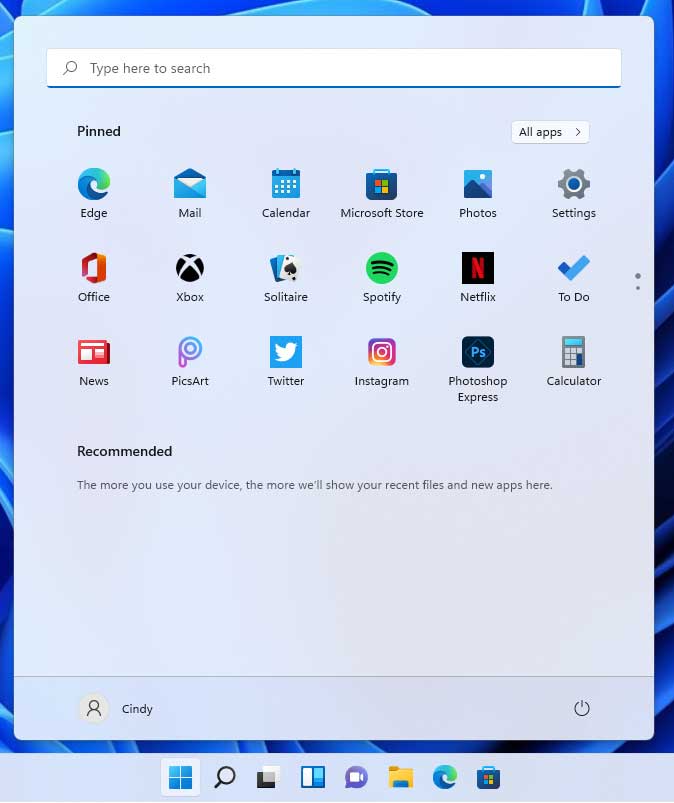
The image below shows the default Start Menu with some pinned apps which for the most part are not too useful unless you customize them as well. There is also a section called Recommended which will start to get populated by commonly opened files and apps.

To add these commonly used folders to your Start Menu, follow these steps:
- Click the Settings gear icon at the top right of the Start Menu.
- Go to the Personalization section in the left menu.
- Click on the Start category on the right side.
- Click on Folders.
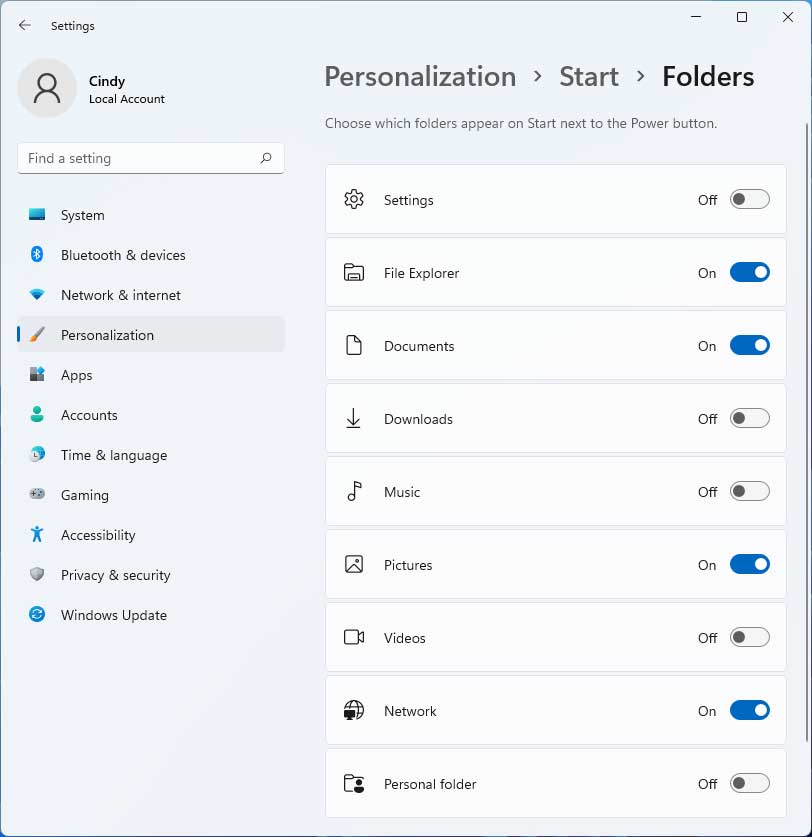
Choosing Which Folders to Display
You will then see which folders you can add to your Start Menu and all you need to do is enable each one you want to have shown. You can also have the Windows Settings, File Explorer and network connections be displayed. If you choose the Personal folder option, that will show the files and folders in your user account under C:\Users\username where username is the account name you log in with.
Viewing and Editing Your Start Menu Folders
Once you make your selections and click on the Start button, you will instantly see your new icons\shortcuts on the Start menu. Then you can easily click on whichever one you need to access. The icons won’t have any text letting you know what they are for but the picture should make it fairly obvious. Plus, you can hover over any one of them and it will show you the name of that folder.
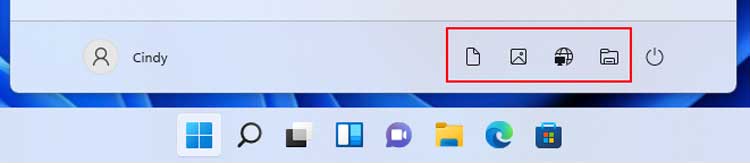
To make changes to which icons are shown, you can right click on any of the icons and choose Personalize this list. You will then be brought back to the Folders section in the Windows settings. Unfortunately, you can’t change the order of where these icons are located or drag and drop them like you can with the Quick Launch bar like we used to use in Windows 7. You can however add the Quick Launch toolbar to Windows 11 by following the instructions in this video.
How to Hide the “Recommended” Files for More Space
While adding custom folders next to the power button is helpful, you might also notice that the Windows 11 Start Menu dedicates a massive amount of space to the “Recommended” section. This area shows your recently opened files and recently installed apps.
If you prefer a cleaner Start Menu, or if you simply want more room to pin your favorite programs, you can shrink this section.
- Open the Start Menu and go to Settings.
- Click on Personalization and then Start.
- At the top of this menu, look for the Layout options.
- Select “More pins.”
This will reduce the Recommended section to a single small row, giving you extra space to pin apps above your new folder shortcuts.
Troubleshooting: Start Menu Folders Not Showing Up?
If you followed the steps above and toggled your folders to “On,” but they still aren’t appearing next to your power button, your system might just need a quick visual refresh. You don’t need to restart your entire computer to fix this.
- Right-click the Start button and select Task Manager.
- In the “Processes” tab, scroll all the way down until you find Windows Explorer (it looks like a yellow folder icon).
- Right-click Windows Explorer and select Restart.
Your screen will flash for a second as the taskbar and Start Menu reload. Once it comes back, click your Start button again, and your custom folders should now be perfectly visible.
The Fastest Alternative: Windows Keyboard Shortcuts
If you are a true Windows power user, clicking through the Start Menu might still feel too slow. If you want instant access to your file system without reaching for your mouse, rely on keyboard shortcuts.
Simply press the Windows Key + E on your keyboard. This instantly launches a new File Explorer window, allowing you to jump straight into your Documents, Downloads, or connected Network drives in a fraction of a second.
For additional training resources, check out our online IT training courses.
Check out our extensive IT book series.