Last Updated on February 22, 2026
Windows has always offered a way to shut down your own computer or other computers on the network remotely. You do this via a standard command line prompt using the powerful shutdown command. This built-in feature comes in extremely handy if you are not physically near the computer that needs to be reset or shut down.
There is actually a secret way to modify this command by adding a specific switch to the text string. This allows you to use a graphical interface instead of the text-based command line. It makes it much easier to choose exactly what computers to shut down or even restart simultaneously. Just be aware that you need to have the correct network administrator permissions to be able to do this.
Creating the Shutdown GUI Shortcut
1. Understand the Command Switches
The basic shutdown command uses specific text switches to control exactly how it is used. For example you can use the -r switch to reboot a machine rather than completely shut it down. You can also use the -t switch to control exactly how many seconds pass before the computer is shut down or restarted.
2. Use the Interactive Switch
If you use the -i switch then Windows will immediately launch the hidden graphical interface. This popup window allows you to visually fine tune exactly how you want the target computer to shut down. It completely removes the need to memorize complex command line strings.
3. Create a Desktop Shortcut
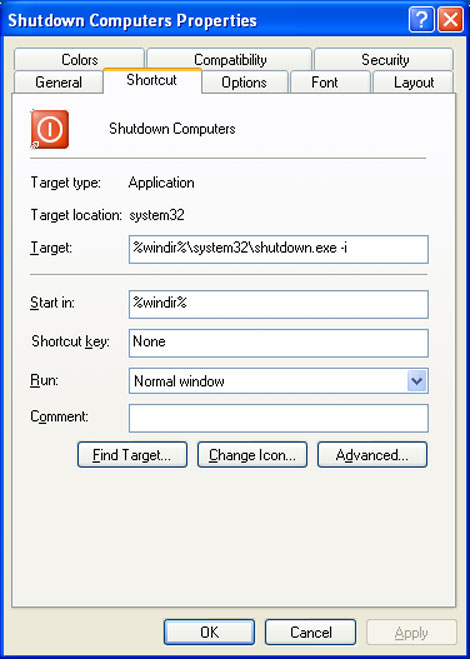
You can easily make a permanent desktop shortcut for this graphical interface. Right click your desktop and select New followed by Shortcut. Make the target for the shortcut be exactly %windir%\system32\shutdown.exe -i and click Next. That way you can have it as a permanent icon that you can double click to run anytime.
Using the Remote Shutdown Dialog Box
1. Add Target Computers
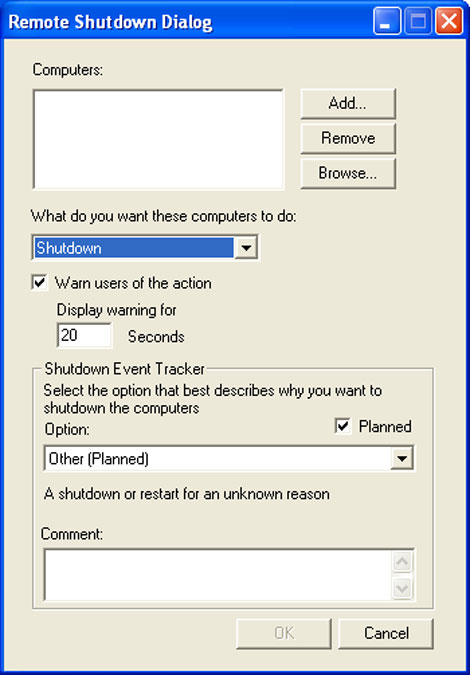
When you launch the shutdown interface you will see a blank computers list at the top. You can click on the Add button to manually add target computers by their exact network name. You can also click the Browse button to search Active Directory looking for computers if your office uses a Windows domain.
2. Choose Your Shutdown Action
Then you can choose exactly what action you want to perform on those selected machines. You can select if you want to completely shut down, reboot, or simply log off the active users. You also set exactly how long the system waits until that event happens.
3. Configure the Event Tracker
You might want to officially track your network reboots for auditing purposes. You can use the built-in Shutdown Event Tracker to log a description of why you shut down the computers. This leaves a clear paper trail in the Windows Event Viewer for other system administrators to read later.