Last Updated on March 26, 2026
If you have been using email, or even the internet for even a short amount of time, you know how dangerous of a place it can be. There are malicious websites out there just waiting for you to connect to so they can steal your information or install some malware on your computer.
Then of course we have email attachments which can look innocent but can be hiding a virus or some other destructive type of file. Fortunately, our email software does a good job of blocking dangerous attachments but what if the email you have opened in Outlook has an attachment that you know is safe, but it won’t let you download it? In this article, we will be showing you how to enable blocked attachments in Microsoft Outlook so you can download them if needed.

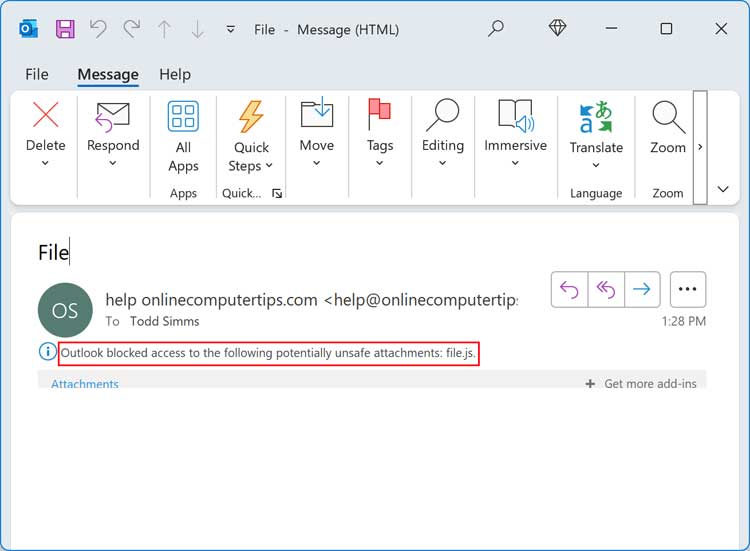
When you open an email in Outlook that has a file type that is blocked by default, you will see the file name but you will get a warning banner. It generates a message that says “Outlook blocked access to the following potentially unsafe attachments” and then the file name itself. You will notice that you are unable to take any action on the attachment such as open or download it. This hard block protects your system from accidental infections.
Modifying the Windows Registry to Unblock Files
1. Open the Registry Editor
To get around this issue so you can enable blocked attachments in Outlook, you will need to perform a simple registry edit. To open the registry editor, simply type in regedit in the Windows search box. Choose Registry Editor from the list. Grant the application administrative privileges to continue.
2. Navigate to the Outlook Security Key
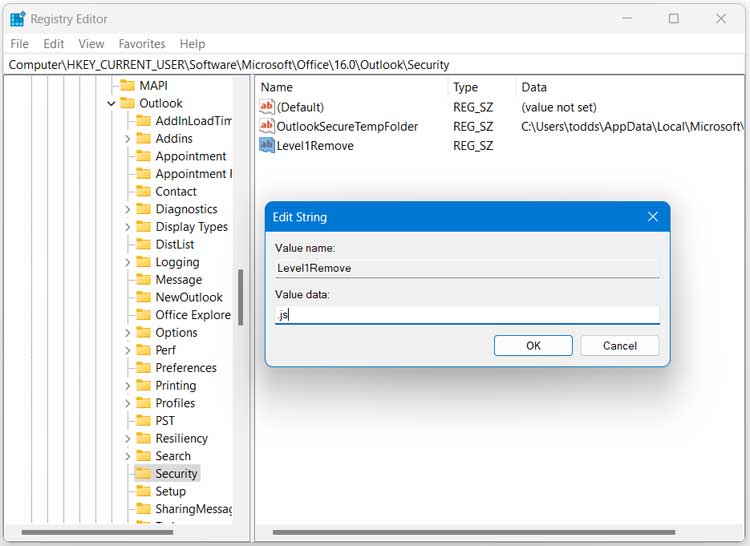
Now you will need to navigate to the following registry key. Paste Computer\HKEY_CURRENT_USER\Software\Microsoft\Office\16.0\Outlook\Security directly into the address bar at the top of the window. Press enter to jump straight to the correct folder. If you have a different version of Office, then you might have to change the 16.0 to your current version.
3. Create the Level1Remove String Value
While in the Security key, right click a blank area on the right side of the screen. Choose New and then select String Value from the context menu. Call it Level1Remove exactly as shown. Make sure you have the capital letters and absolutely no spaces.
4. Enter the Blocked File Extension
Then you will need to double click on the new Level1Remove string value you just generated. Type in the file extension for the file that is blocked in the Value data field. For our example we have an attachment named file.js so we will need to type in .js with the period in the Value data box. Click the OK button to save the record.
Accessing Your Unblocked Attachments
1. Restart Microsoft Outlook
You must close Outlook completely before testing the fix. The application needs a fresh start to read the new registry values. Verify the program is not running in your system tray. Launch the application again from your desktop shortcut.
2. Download the Previously Blocked File
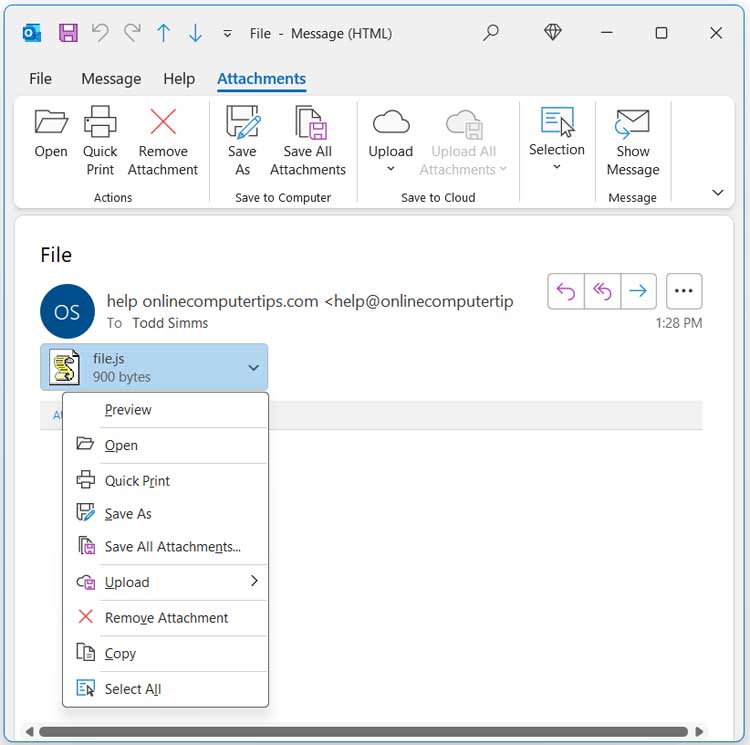
Now you can open Outlook and go to the email with the blocked attachment. The red warning banner will be completely gone. You should be able to do things such as open or download it directly to your local hard drive.
3. Unblock Multiple File Types Simultaneously
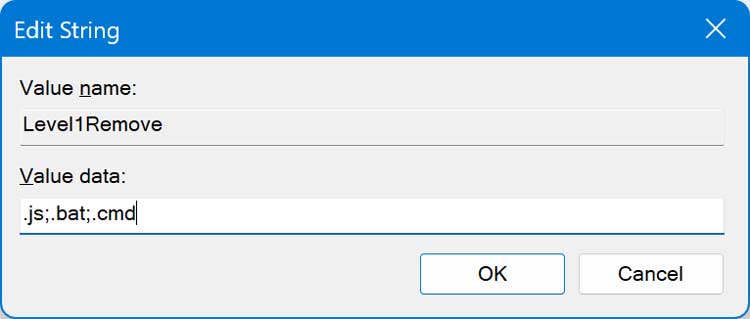
If you know that you will be having other types of file attachments that will most likely be blocked, you can go back to the Level1Remove string value. Add them to the Value data box separated with semi colons. Just be sure to include the period at the beginning of each one. This allows multiple file types through the security filter at the exact same time.
4. Review Alternative Unblocking Methods
Sometimes you might encounter restrictions imposed directly by your exchange server administrator rather than the local software. Here is another article on unblocking attachments in Outlook that might help you out. It covers alternate methods for retrieving your blocked files securely.
For additional training resources, check out our online IT training courses.
Check out our extensive IT book series.