Last Updated on April 16, 2026
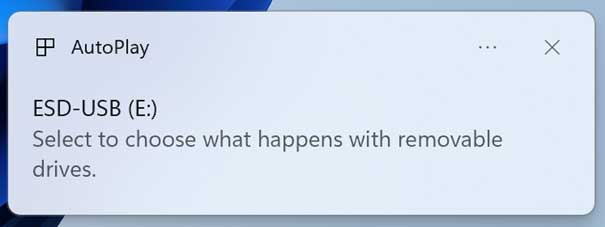
When you connect a USB flash drive, external hard drive, or camera memory card, Windows uses a feature called AutoPlay to determine how to handle the new device. By default, it will either ask you what you want to do or automatically open a specific app, such as File Explorer. While convenient, AutoPlay can also be a security risk if it automatically runs software from an unknown drive. If you get sick of answering the same old question every time then you can set the AutoPlay options to perform a certain operation automatically or to take no action at all. Many people may not even know that these settings are customizable but they are and they are pretty easy to change.
To get to the AutoPlay settings you can do a search for auto play from the Windows taskbar or go to the Windows settings to Bluetooth and devices > Autoplay.
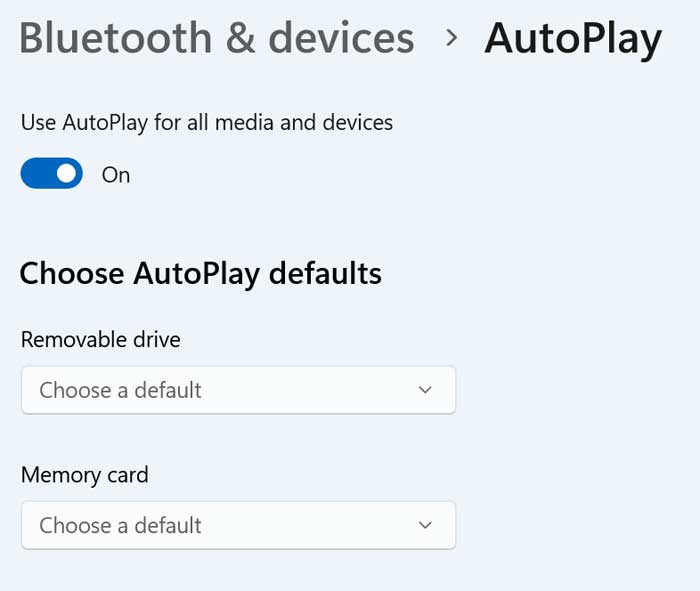
You will then have options as to what Windows will do when you insert a removable drive or a memory card.
For removable drives, you will have the following choices.
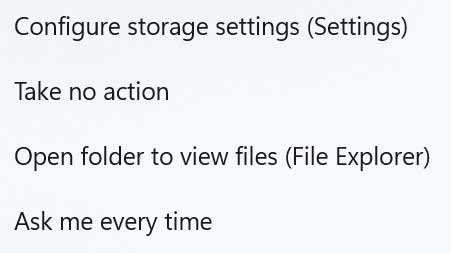
If you choose take no action, you will need to browse to the location of the device in File Explorer and open it manually. If you choose ask me every time, you will get a prompt from Windows asking you what you want to do.
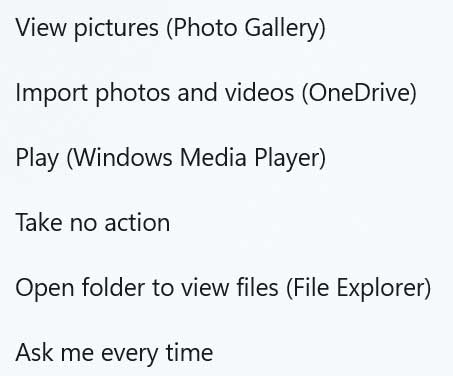
For memory cards, you will have the following choices. As you can see, you have additional options for viewing pictures or importing photos into OneDrive since Windows assumes your memory card will be from a camera.
The Classic Control Panel Method
For even more granular control, you can still access the legacy AutoPlay settings. This is useful if you want to set different rules for specific types of content, like software, mixed content, or blank DVDs.
- Open the Start Menu and type Control Panel.
- Change the “View by” in the top right to Large icons.
- Click on AutoPlay.
- Here, you can check or uncheck “Use AutoPlay for all media and devices” and choose default actions for over a dozen different media types.
If this is something like a USB flash drive or removable hard drive, you may want to use the open folder to view files option so Windows will automatically open File Explorer to that drive when you connect it so you will not need to open File Explorer and manually browse to it.
Security Recommendation: “Take no action”
From a security perspective, many IT professionals recommend setting AutoPlay to Take no action or Ask me every time for removable drives. This prevents “AutoRun” malware from automatically executing when you plug in a drive you may have found or borrowed. Setting it to “Take no action” forces you to manually browse the drive via File Explorer, allowing you to scan for suspicious files before interacting with them.
Pro Tip: If you have set a device to “Take no action” but want to quickly see your AutoPlay options for a drive that is already plugged in, simply right-click the drive in File Explorer and select Open AutoPlay…. This allows you to choose an action on the fly without changing your permanent system settings.
For additional training resources, check out our online IT training courses.
Check out our extensive IT book series.