
Last Updated on May 21, 2026
If you have been using any of the popular desktop virtualization platforms such as Oracle VirtualBox, Hyper-V Desktop or VMware Workstation Professional, you have most likely seen the various networking options that you can configure for your virtual machines.
For the most part you will be using NAT (Network Address Translation) so your VMs will share the network\internet connection with the host computer that runs the virtualization software. But NAT is not the only option, and you can use other networking connection methods such as host only networking or bridged networking.
VMware Workstation’s bridged networking feature allows virtual machines to appear as individual devices on the physical network, effectively bridging the virtual and physical network environments. With bridged networking, each virtual machine is assigned its own unique IP address on the same subnet as the host system. This enables seamless communication between virtual machines and other devices on the network, allowing them to access resources and services as if they were physical machines. Bridged networking is particularly useful for scenarios where virtual machines need to interact with other devices on the network or for testing network configurations in a virtualized environment.

But when using a bridged connection in VMware Workstation, you may come across a fairly common issue where you cannot get any network on internet connectivity on your virtual machines. In this article, we will be showing you how to fix the bridged connection not working issue in VMware Workstation.
Troubleshooting the VMware Bridged Network Bug
1. Verify Your Virtual Machine Network Settings
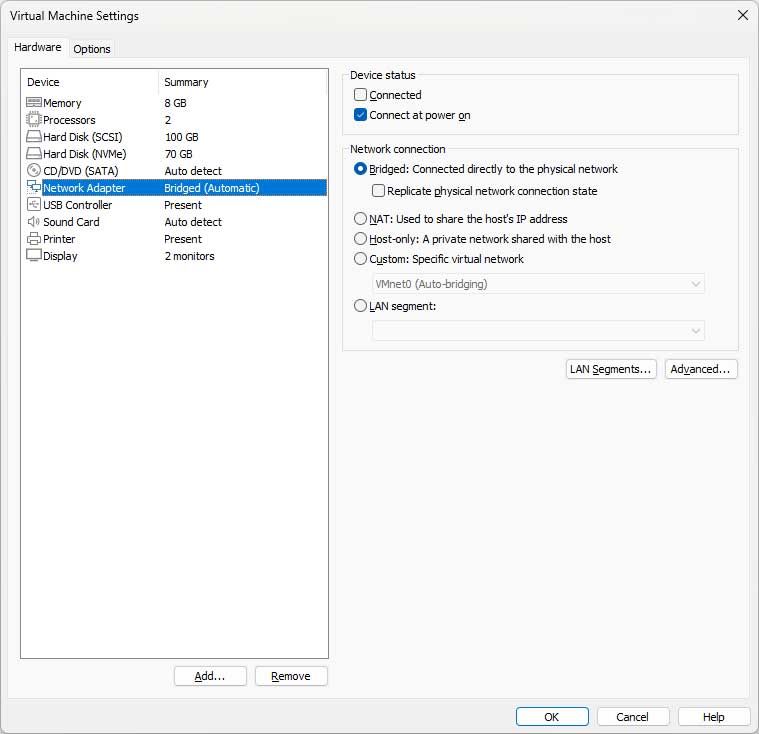
To make sure that you are even using bridged networking on your VMs, you must first verify the hardware profile is accurate. You can go to their settings and then navigate directly to the Network Adapter section. Under Network connection, ensure the radio button is set to Bridged. Look right below that section under Device status to confirm the box labeled Connect at power on is checked. This forces the virtual network card to activate immediately when the guest operating system boots up.
2. Open the Virtual Network Editor
If everything is configured correctly here and the bridged connection is still not working, it is a fairly easy thing to fix. The issue is an actual software bug rather than a problem with your personal configuration. You need to bypass the standard VM settings and access the global network preferences. Go up to the Edit menu in the main VMware Workstation management console and choose Virtual Network Editor. Windows will prompt you for administrative privileges to launch this specific tool.
3. Adjust the Automatic Bridging Settings
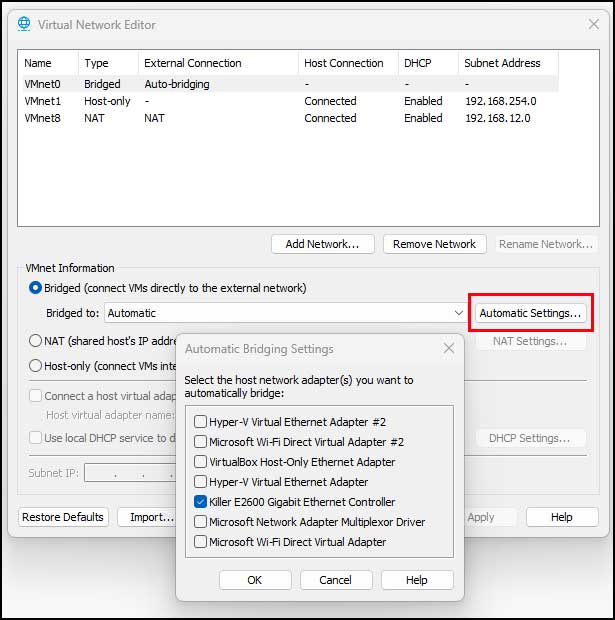
The Virtual Network Editor displays all active subnets mapped to your host machine. You will need to click on the Bridged network type at the top of the list to highlight it. Look down near the middle of the window and click on the Automatic Settings button. A new dialog box pops up. It displays every physical and virtual network interface currently installed on your host PC.
4. Isolate Your Active Network Adapter
The connection bug occurs because VMware gets confused by multiple virtual adapters fighting for priority. From here you will need to deselect all of the network adapters except for the one that you are using for the bridged connection on your virtual machine. Clear the checkboxes next to any Hyper-V virtual adapters, unused Wi-Fi direct adapters, or active VPN tunnels. Leave a single checkmark next to your primary active Ethernet or Wi-Fi controller.
5. Apply the Changes and Test Connectivity
After isolating your primary adapter, simply click on the OK button to close the automatic settings window. Click the Apply button at the bottom right corner of the main editor window to have the changes applied to the host hypervisor service. Now you can go back to your running virtual machine and the networking\internet connection should be working perfectly. Open a web browser or run a quick ping command to verify traffic is flowing.
6. Restore Your Adapter Settings (Optional)
VMware usually only needs this isolated connection temporarily to establish the initial network bridge. If everything is now working, you should be able to go back to the Virtual Network Editor. Reopen the automatic settings menu. Enable all of the network adapters that you have disabled in the previous step. Click apply once again. Your bridged connection will stay active even with the other adapters turned back on.
For additional training resources, check out our online IT training courses.
Check out our extensive IT book series.