
Last Updated on April 28, 2026
Kill stubborn tasks that refuse to die with Taskkill
Everyone who has ever used Microsoft Windows has had a program freeze up on there and if you say you have not then your computer must stay off 24/7! If you are lucky the program will just close itself after freezing up and you won’t lose any data. But sometimes you aren’t that lucky and have to force close the program.
Another option that many users don’t realize they have is using keyboard shortcuts or built-in Windows prompts to regain control before things get worse. Pressing Ctrl + Alt + Delete can sometimes pull the system’s focus away from the frozen program long enough to open Task Manager cleanly, while Alt + F4 may still close the application if it’s only partially stuck. In more stubborn cases, Windows will even display a “not responding” message that gives you the choice to wait or close the program outright, which can save you the extra steps of hunting through processes. These small tricks can make dealing with a frozen application less frustrating and help you decide quickly whether the program can recover or needs to be shut down.

Most users start by right-clicking the Taskbar and opening Task Manager. In Windows 11 and 10, the “Applications” tab was merged into the Processes tab. If a simple “End Task” doesn’t work there, the next step is usually the Details tab, which shows the actual .exe files and their Process IDs (PIDs). But when a program is truly “zombie”, meaning it’s frozen and won’t respond to the Task Manager UI, you need the command line.
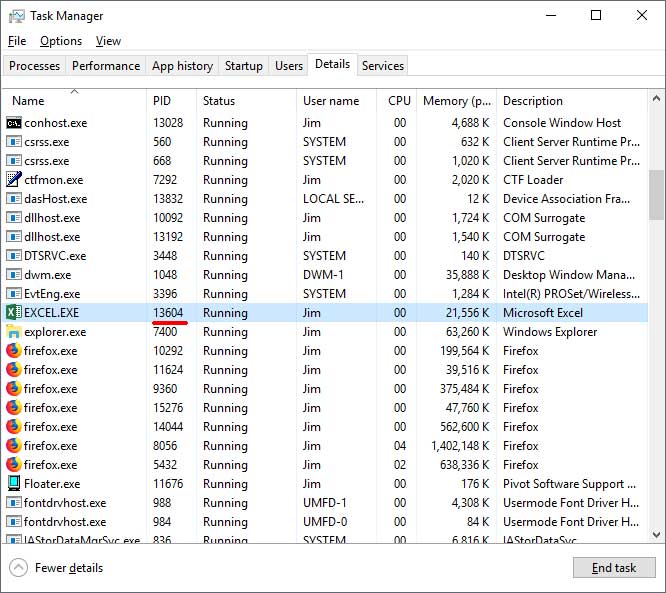
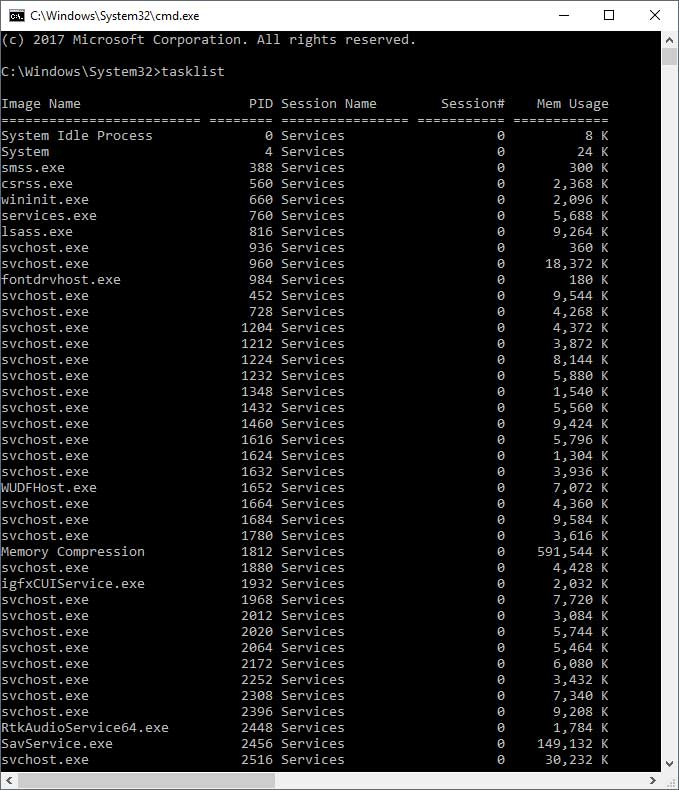
But then again sometimes even these methods don’t work and you need to take things to the next level. This is where Taskkill comes into play. Taskkill is an executable you run from a command prompt and its used to end a process or task by process ID (PID) or image name. To use taskkill, you first need to identify the target. You can do this by running the tasklist command. This generates a text-based list of every running process. In 2026, it is often easier to use PowerShell or the Windows Terminal and run Get-Process, which provides a much more readable and searchable list of running applications.
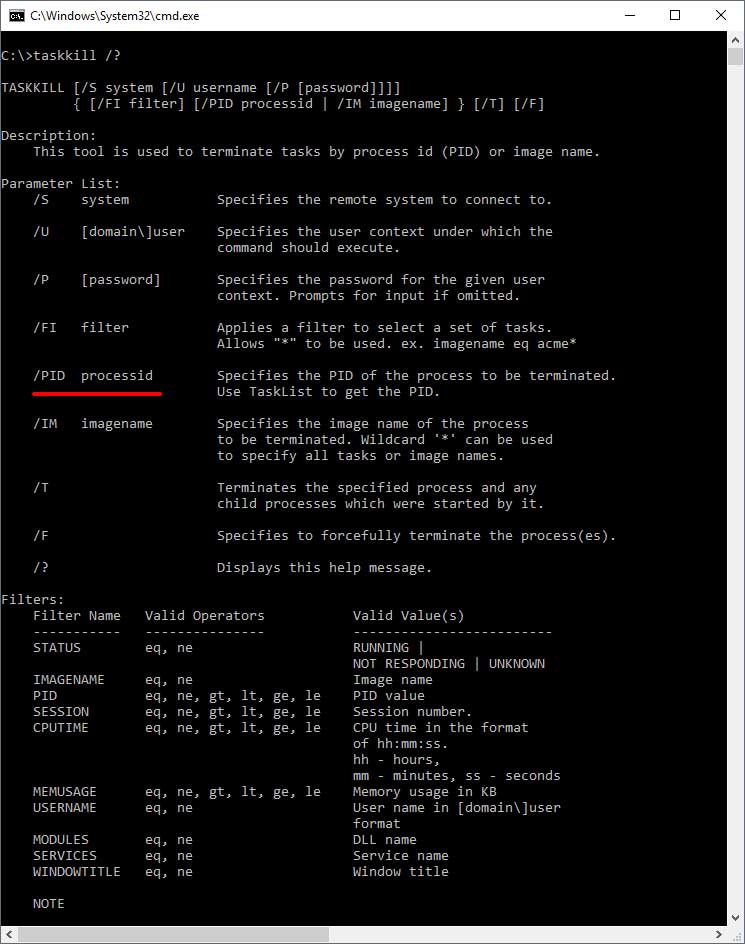
Now keep in mind that Taskkill has many different parameters you can use besides image name and PID. If you run taskkill /? you will see the parameter list and other switches you can run to fine tune things such as connecting to a remote system, running taskkill as a different users and killing any child processes along with the one you are trying to kill. At the bottom it will even show you some examples.
he most effective way to use taskkill is with the Force switch (/F). Without this, Windows simply “asks” the program to close, which a frozen program will ignore.
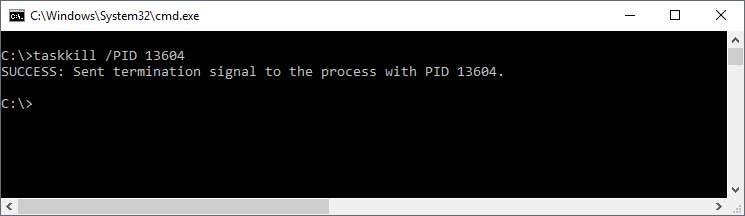
To kill a specific process by its ID:
taskkill /F /PID 13604
To kill every instance of a program by name (like closing all stuck Chrome tabs at once):
taskkill /F /IM chrome.exe /T
The /T switch is a lifesaver—it kills the “child processes” as well, ensuring the program doesn’t just restart itself immediately.
Occasionally, taskkill might return an error saying “The process cannot be terminated.” This usually happens because the process is waiting on a hardware “I/O” request (like a failing hard drive or a stuck network printer). So instead of rebooting, try the PowerShell command:
Stop-Process -Name “ProcessName” -Force
This bypasses the standard Windows termination signal and is more aggressive than the classic Command Prompt version.
So if you are in a bind and can’t close a frozen program and don’t want to reboot then keep Taskkill in mind because for the most part it will do the job and prevent headaches at the same time!
For additional training resources, check out our online IT training courses.
Check out our extensive IT book series.