Last Updated on October 11, 2026
Google’s Gmail app is one of the most popular email platforms in use today and if you have a Google account, you have a Gmail account as well. You can use your Google account to access the many available apps that Google offers such as Docs, Forms, Sheets, Photos, YouTube, Drive and so on.
When you first start using your Gmail account, you most likely will not have any contacts tied to your account unless you happen to use an Android based smartphone. If that’s the case, your phone contacts will be tied to your Google account\contacts. Then you also have the option of manually adding contacts to your Google account

If you are switching to Gmail from a different email account or simply adding a Gmail account as an additional email address, you can easily import your contacts into Gmail from your existing accounts. You can even pull them from a list you have saved directly on your computer. There are a couple of ways you can import your contacts into your Gmail or Google account and the procedure is fairly simple no matter which process you use.
Accessing the Import Tool
1. Navigate to Google Contacts
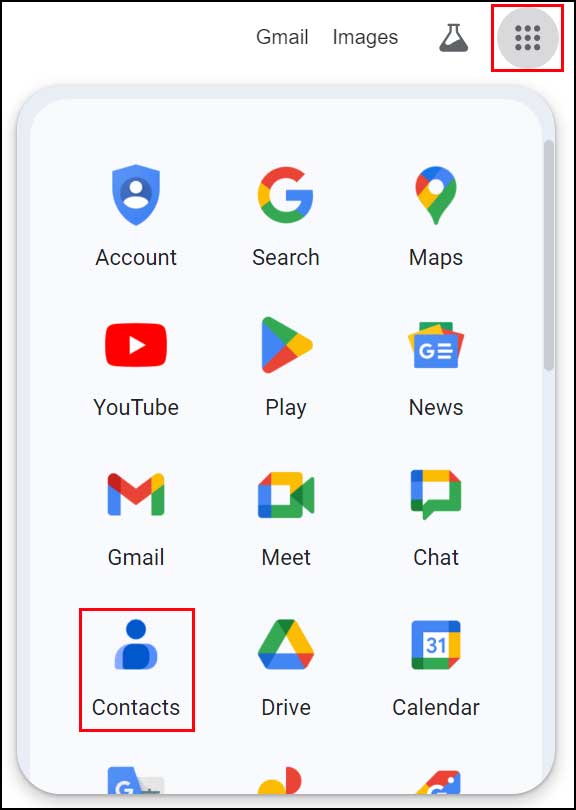
To begin, you will need to go to the Google contacts page which can be accessed at https://contacts.google.com/. You can also get to it by clicking on the Google Waffle icon in the upper right corner of your screen. Finding the Contacts icon from there takes only a single click.
2. Locate the Import Button
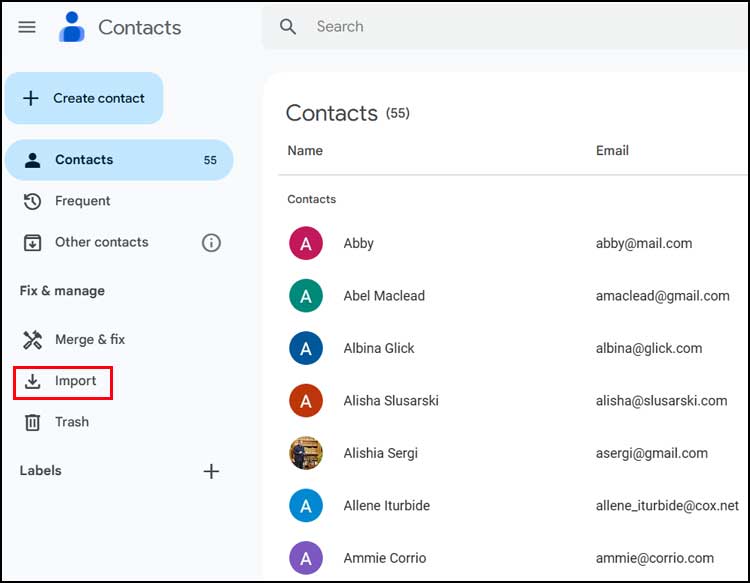
Once you are in your Google contacts, look at the left side menu panel. You will see a specific section that says Import that you can click on to see the import options. Clicking this button opens a new configuration window.
3. Choose Your File Type
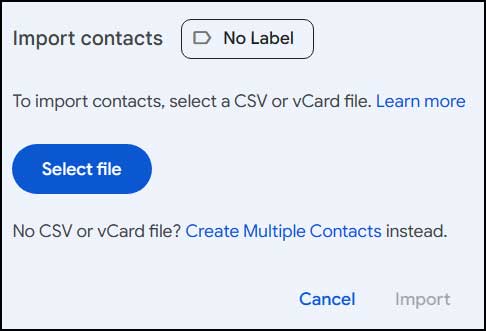
In order to import your contacts into your Google or Gmail account, you will need to have them stored in a specific format. The system requires either a CSV file or a vCard. You must select one of these file types from your local hard drive.
Understanding Contact File Formats
1. Using a CSV File
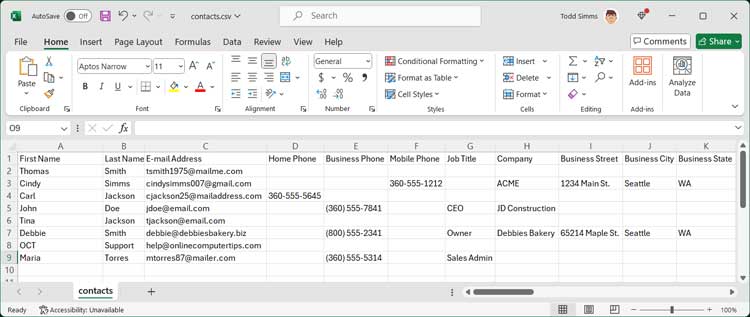
A CSV (Comma-Separated Values) file is a plain text file format used to store tabular data. Each line represents a row and each value within a row is separated by a comma. The image below shows a CSV file open in Microsoft Excel. They can also be opened in other spreadsheet apps and even basic text editors like Notepad.
2. Using an Email vCard
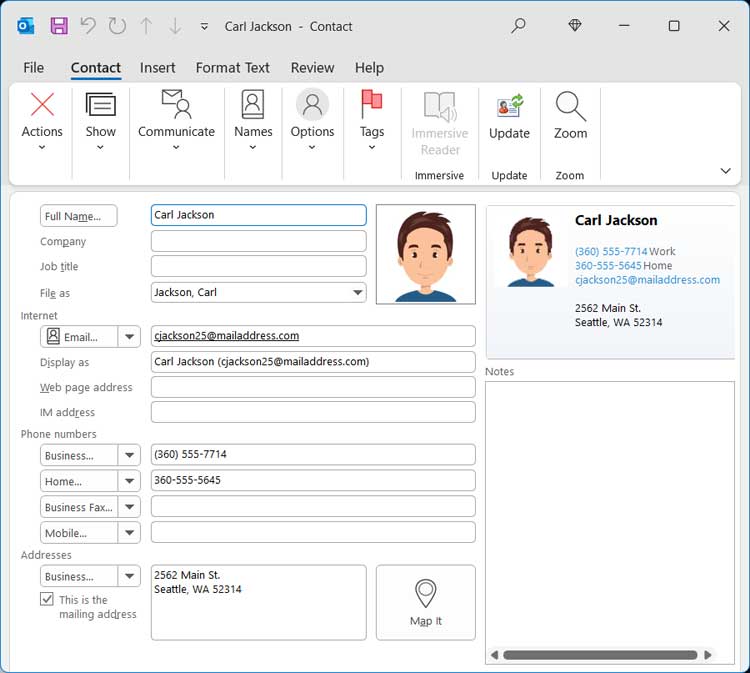
An email vCard is a digital file format used to exchange contact information via email. It typically contains details such as a person’s name, email address, phone number, and other relevant contact information. When attached to an email, recipients can easily import the vCard into their email client or address book. This allows them to quickly add the sender’s contact information to their contacts list. Many popular email clients such as Microsoft Outlook, Apple Mail and Mozilla Thunderbird support using vCards. The image below shows a vCard file open using Microsoft Outlook.
Importing and Labeling Contacts
1. Assign Labels During Import
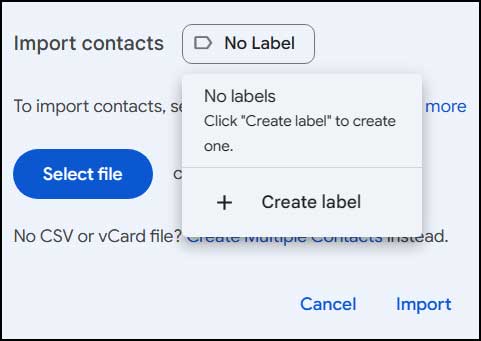
The process for exporting the contacts from your existing email application will vary based on your software. You should have the option to export them to a CSV file since that will allow you to import them all into Gmail at the exact same time. If you use the vCard method, you can only import one single vCard file at a time. When importing your contacts, you will have the option to assign them a label that you already have configured. You can also create a brand new label during the import process. Labels are used to categorize and group your contacts based on specific criteria or characteristics. They can also be used for advanced sorting and searching purposes.
2. Review Your Imported CSV Data
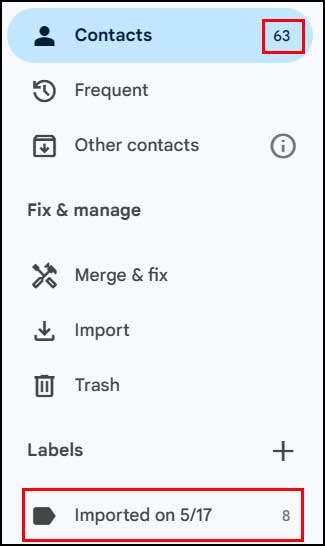
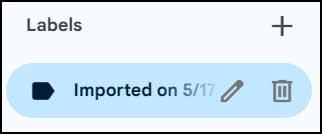
For our first example, we will import a CSV file that was exported directly from Microsoft Outlook. We will not assign any labels to the newly imported contacts during this initial step. Our total contact count has now gone from 55 to 63. You can also see that Google added a new label called Imported on 5/17 for the newly imported contacts since we did not specify a custom label during the import process.
3. Edit or Delete Custom Labels
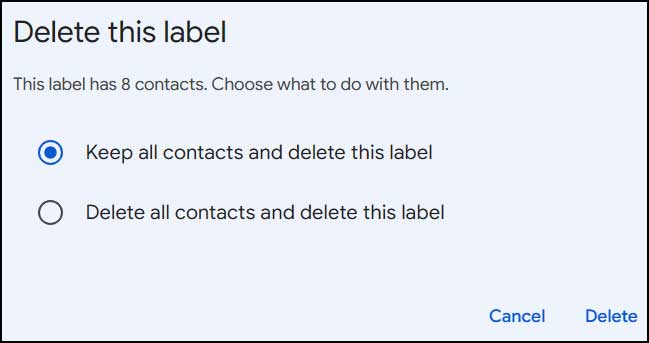
When you click on this new label, you have the option to edit its display name. You can also remove the label altogether by clicking on the trash can icon. When you delete the label, you will have the option to keep the contacts and delete the label or delete the label as well as the contacts. We will use the first option and then Google will place the contacts in with the rest of your unlabeled contacts.
4. Import a vCard File
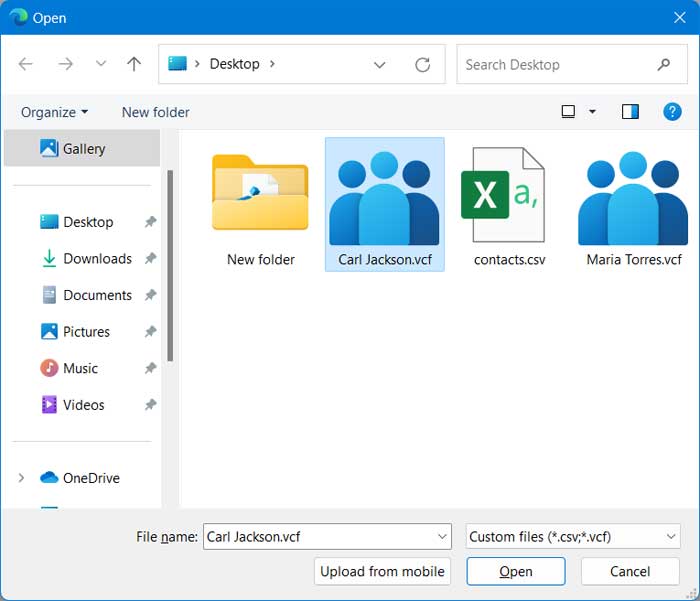
If you have a vCard file that you want to import into Gmail, you can use that specific option. Browse to the exact location of the saved vCard file on your computer hard drive. Select the file and click the Open button. It will be added as an imported contact just like when you use a CSV file if you do not choose a label for it during the import process.
For additional training resources, check out our online IT training courses.
Check out our extensive IT book series.