Last Updated on May 6, 2026
If you are still pressing the Print Screen key on your keyboard and pasting the result into Microsoft Paint, it is time for a serious workflow upgrade.
Capturing exactly what is on your screen is one of the most important skills you can have, especially if you need to send an error message to IT support or save a receipt for your records.
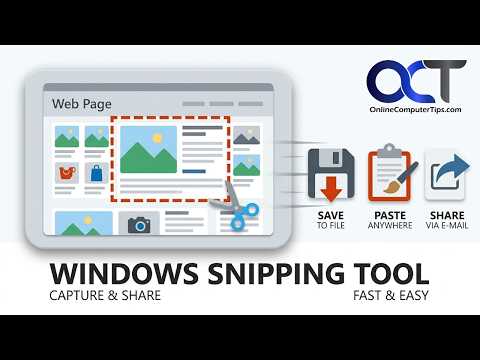
While third-party screenshot tools used to be a necessity, Microsoft has completely overhauled their built-in offering.
The modern Windows Snipping Tool has evolved from a very basic image grabber into a full-featured productivity suite.
Today, it not only captures still images, but it also functions as a built-in screen recorder and features a powerful OCR engine that can magically pull editable text out of any static image in seconds.
Whether you are on Windows 10 or Windows 11, mastering this built-in utility will save you countless hours.
Understanding the Different Snipping Modes
Before taking a screenshot, it helps to know exactly what the Snipping Tool is capable of. You are no longer limited to just taking a picture of your entire monitor.
1. Rectangular Snip: This is the standard mode. It allows you to draw a precise, custom-sized box around the exact area or image you want to capture, ignoring the rest of your screen.
2. Window Snip: Instead of manually dragging a box, this mode highlights an entire application window (like your web browser or a specific dialog box) and captures it perfectly with one click, excluding your taskbar and desktop background.
3. Full-Screen Snip: This mode takes a picture of absolutely everything displayed on your monitor, which is helpful if you have a multi-monitor setup and need to show the full context of your workspace.
4. Free-Form Snip: If you need to capture a weirdly shaped object, this mode lets you manually draw an irregular line, such as a circle or a triangle, completely around the item.
5. Video Recording: Newly added to Windows 11, you can now toggle the Snipping Tool from a camera icon to a video icon to record a specific box on your screen. This is perfect for creating quick tutorial videos.
6. Text Extraction (OCR): After taking a screenshot of a document or an image with words on it, the Snipping Tool can scan the image, extract the text, and let you copy it directly into Word or an email.
How to Take a Screenshot
Microsoft has made triggering the Snipping Tool incredibly fast. You no longer have to dig through your Start Menu to find the application, though you can still open it that way if you prefer.
1. Press the Windows Key + Shift + S at the same time on your keyboard.
2. Your computer screen will instantly dim, and a small toolbar will appear at the very top center of your monitor.
3. Select your desired shape from the top toolbar (Rectangular, Free-form, Window, or Full-screen).
4. Click and hold your left mouse button, drag the cursor over the area you want to capture, and release the button.
5. The screenshot is immediately saved to your invisible Windows clipboard so you can paste it directly into an email.
6. A notification will also slide in at the bottom right corner of your screen. Click on that notification popup to open the image inside the main Snipping Tool markup window.
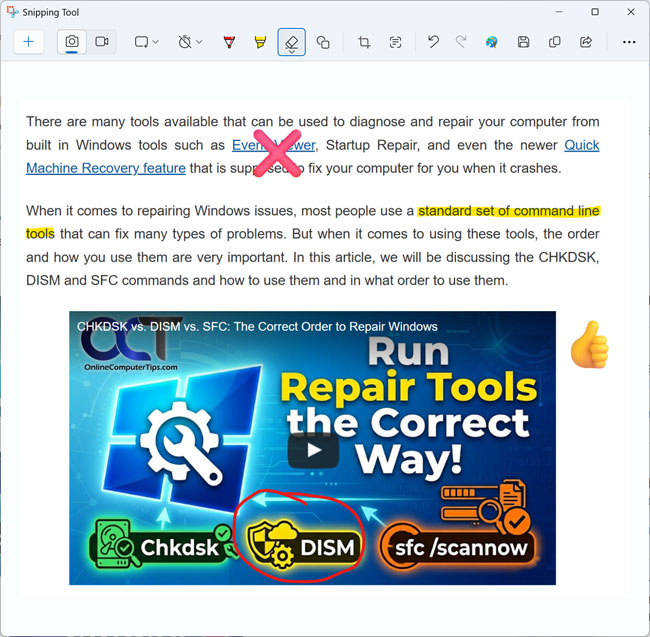
Once your image is sitting inside the main Snipping Tool window, you have a few options to finalize it.
Annotate the Image: Use the pen or highlighter icons on the top toolbar to draw arrows, circle important information, or highlight specific text. If you make a mistake, simply use the eraser tool to remove your drawings.
Save the File: Click the floppy disk icon in the top right corner, or press Ctrl + S on your keyboard. Choose a destination folder, give your file a recognizable name, and select a file type. PNG is the highest quality format for screenshots, but JPEG works fine if you need a smaller file size.
Share Immediately: If you do not want to clutter up your hard drive by saving the file, just click the “Copy” icon at the top. You can then right-click and paste the image directly into a Word document, a Teams chat, or an Outlook email.
Pro Technician Tips and Troubleshooting
Use the Delay Timer for Disappearing Menus
Have you ever tried to take a screenshot of a drop-down menu, but the second you press a keyboard shortcut, the menu vanishes?
Open the Snipping Tool from your Start Menu, click the clock icon at the top, and set a 3-second or 5-second delay. Click “New,” open your drop-down menu quickly, and wait.
The screen will freeze and dim after the timer runs out, allowing you to easily capture the hidden menu.
Change Your Print Screen Key Behavior
If you prefer hitting a single button instead of the three-key combo, you can map the Snipping Tool to your traditional Print Screen (PrtScn) key.
In Windows 11, go to Settings, click on Accessibility, and select Keyboard. Toggle the switch on for “Use the Print screen key to open Snipping Tool.”
How to Blur Sensitive Information
If you are sending a screenshot to technical support but it contains your personal email address or a password, you can easily hide it.
In the modern Windows 11 Snipping Tool, click the “Text Actions” button (the icon with three lines of text) after taking your screenshot.
It will automatically detect phone numbers and emails and give you a button to “Quick Redact” them with black bars before you share the image.
What Do I Do If the Snipping Tool Freezes or Won’t Open?
Occasionally, background Windows updates can cause the Snipping Tool to hang. If your screen gets stuck in the dimmed state or the shortcut stops working, you can quickly reset the app.
Go to Windows Settings, click on Apps, select Installed Apps, and find the Snipping Tool.
Click the three dots next to it, choose Advanced Options, and scroll down to click the “Reset” button. This will clear the app’s cache and get it working smoothly again.