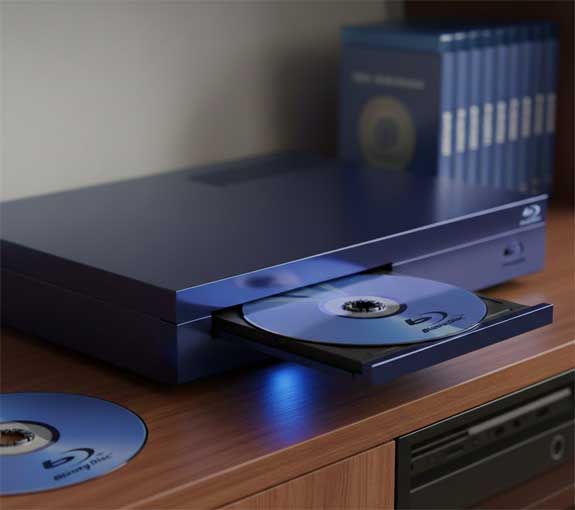
Gone are the days of VHS tapes and even DVDs as the ultimate home entertainment format. While DVDs revolutionized video quality compared to VHS, Blu-ray technology took things to an entirely new level, offering high-definition video and massive storage capacity. Today, Blu-ray remains relevant for movie enthusiasts, gamers, and professionals who need reliable physical media storage.
In this guide, we’ll explore what Blu-ray is, its advantages over DVDs, and how it fits into today’s digital world.
What Is Blu-ray?
Blu-ray is an optical disc format designed for high-definition video playback and large data storage. It was developed to replace DVDs and offers significantly higher capacity:
- Single-layer Blu-ray disc: 25 GB
- Dual-layer Blu-ray disc: 50 GB
This is five times more storage than a standard DVD, which typically holds 4.7 GB. Blu-ray discs use a blue-violet laser instead of the red laser used by DVDs, allowing for greater precision and more data packed into the same physical size.
Why Blu-ray Was a Game-Changer
When Blu-ray launched, its biggest selling point was High Definition (HD) video. DVDs maxed out at 480p resolution, while Blu-ray supported 1080p Full HD, delivering up to five times the detail. This made Blu-ray the go-to format for home theaters and movie collectors.
Blu-ray also introduced interactive menus, better audio quality (including Dolby TrueHD and DTS-HD Master Audio), and support for advanced features like subtitles and multiple language tracks.
Blu-ray vs. HD-DVD: The Format War
Blu-ray wasn’t the only next-gen format. It competed with HD-DVD, which also used a blue-violet laser and offered high-definition playback. Ultimately, Blu-ray won the battle thanks to:
- Higher storage capacity (50 GB vs. 30 GB for HD-DVD)
- Stronger industry support from major movie studios and hardware manufacturers
By 2008, HD-DVD was discontinued, and Blu-ray became the standard for physical HD media.
Blu-ray Drives for Computers
Blu-ray drives are available for PCs and laptops, allowing users to:
- Play Blu-ray movies in full HD or even 4K Ultra HD (with compatible discs)
- Burn large files for backup or archiving
- Install games and software distributed on Blu-ray discs
Modern Blu-ray drives often support BD-R (recordable) and BD-RE (rewritable) discs, making them versatile for data storage.
Blu-ray in 2026: Is It Still Relevant?
With streaming services dominating entertainment, you might wonder if Blu-ray is obsolete. The answer: not yet. Here’s why Blu-ray still matters:
- Superior Quality: Streaming compresses video and audio, while Blu-ray offers uncompressed, high-bitrate content for the best viewing experience.
- Offline Access: No internet required, perfect for areas with slow or unreliable connections.
- Archival Storage: Blu-ray discs are durable and ideal for long-term backups.
- 4K Ultra HD Blu-ray: Modern Blu-ray supports 4K resolution, HDR (High Dynamic Range), and advanced audio formats for a true cinematic experience.
Blu-ray vs. Digital Downloads
While digital downloads and cloud storage are convenient, Blu-ray offers physical ownership and avoids issues like DRM restrictions or lost access due to account problems. For collectors and professionals, Blu-ray remains a trusted format.
Cost and Availability
Blu-ray drives and discs are now affordable compared to their early days. External Blu-ray drives for PCs start around $70, and 4K Ultra HD Blu-ray players are widely available for home theaters.
For additional training resources, check out our online IT training courses.
Check out our extensive IT book series.